
A beginner’s guide to the invisible technology running your world — in plain, human language.
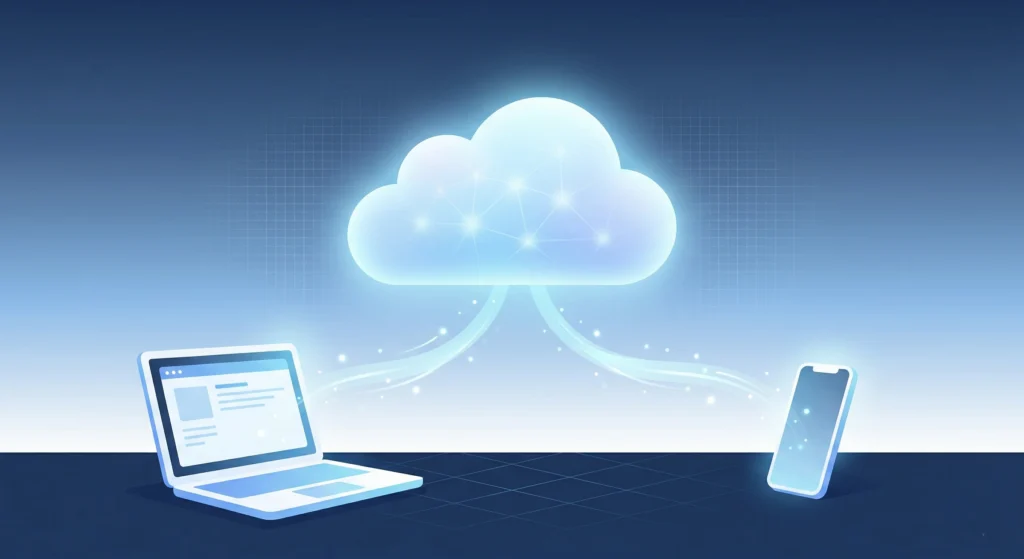
Think about the last time you watched a Netflix show, sent a WhatsApp message, or saved a photo on your phone. None of that lived on your device. It lived somewhere else — somewhere massive, somewhere powerful, somewhere most people never think about. That somewhere is the cloud.
Not too long ago, every business had to buy giant, expensive computer servers, lock them in a room, and hire teams just to keep them running. One crash, one power cut, and everything went down. It was stressful, costly, and honestly — a bit ridiculous. Then cloud computing arrived and flipped the whole model upside down. Instead of owning the machine, you just rent the power. Instead of building the well, you turn on the tap.
In 2026, cloud computing is not a trend anymore — it is the backbone of the entire internet. The global market has crossed $905 billion, and by 2034 it is expected to hit nearly $3 trillion. From the app on your phone to the website of your favourite store, almost everything runs on the cloud. And yet, most people have never stopped to ask: what actually is this thing? How does it work? And should I care?
The answer to that last question is a loud yes. Because understanding the cloud means understanding the world you already live in — and this guide is going to break it all down in the simplest, most human way possible. No jargon. No confusion. Just clarity.
So what exactly is cloud computing?
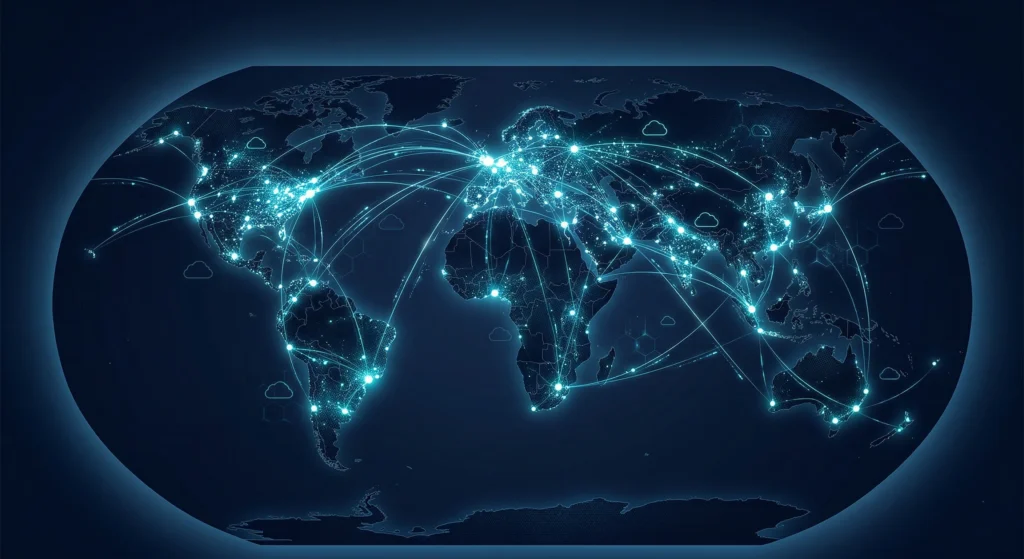
At its simplest, cloud computing means using someone else’s computers — over the internet — to store your data, run your software, or power your applications. Those “someone else’s computers” are actually massive warehouses called data centers, filled with thousands of servers, located all around the world. When you upload a photo, stream a song, or open a Google Doc, a request zips across the internet to one of these centers and comes back to you in milliseconds. The magic is real — it is just happening very, very far away.
Who runs the cloud? Meet the Big Three.
- Amazon Web Services
- The oldest and largest. Powers a huge chunk of the internet you use every day.
- Microsoft Azure
- The corporate favourite. Plugs perfectly into Windows and business tools companies already use.
- Google Cloud
- The smart one. Built for AI, data analytics, and machine learning at massive scale.
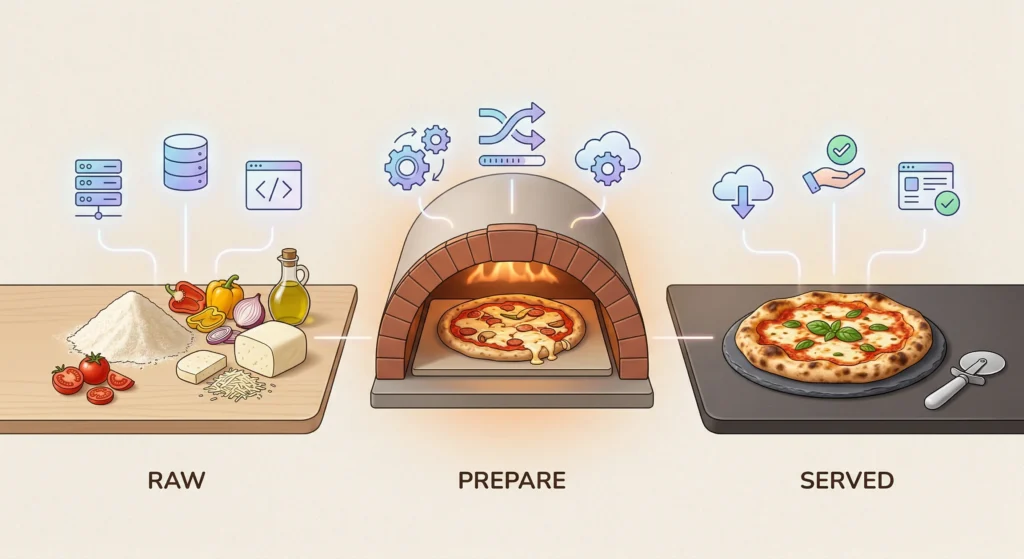
The pizza theory of cloud services
Cloud services come in three flavours, and the easiest way to understand them is to think about ordering a pizza. With IaaS (Infrastructure as a Service), you buy the raw ingredients and cook it yourself — you rent the servers and handle everything else. With PaaS (Platform as a Service), the kitchen is ready, the oven is hot, you just bring your recipe — developers write code without worrying about the hardware underneath. And with SaaS (Software as a Service), you walk into a restaurant and the pizza is already on the table — apps like Gmail, Slack, and Dropbox are fully built and ready to use. You do not touch anything under the hood.
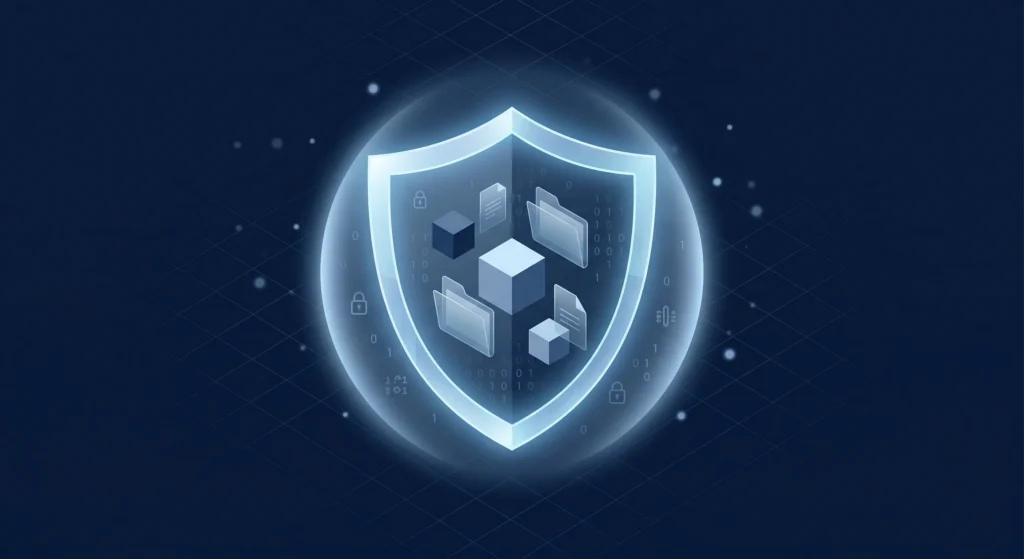
Is my data safe up there?
This is the question everyone whispers. The answer is yes — and often, your data is safer in the cloud than on your own laptop. The Big Three invest billions into security every year. They encrypt your data so thoroughly that even if someone stole it, they would see nothing but gibberish. That said, 54% of cloud data in 2026 is classified as highly sensitive, which is exactly why providers are now using AI-driven security systems that detect threats faster than any human team could.
What is coming next — Edge Computing
The cloud is already fast. But the next evolution — Edge Computing — makes it even faster by processing data closer to where you are, instead of bouncing it to a data center halfway across the world. Think of a self-driving car that cannot afford even a split-second delay. Edge computing handles that decision right inside the car or at the nearest cell tower. It is the cloud, but smarter and closer.
Conclusion
Cloud computing is simply renting computer power, storage, and software over the internet — instead of buying it all yourself. It is why you can stream, collaborate, and work from anywhere. It is why startups can launch overnight without buying a single server. It is why your photos survive even when your phone breaks. The cloud is not some distant tech concept — it is already woven into your daily life, quietly doing the heavy lifting so you don't have to. And as AI and smart devices keep growing, it will only become more essential. You were already using it. Now you know exactly what it is.
Leave a Reply