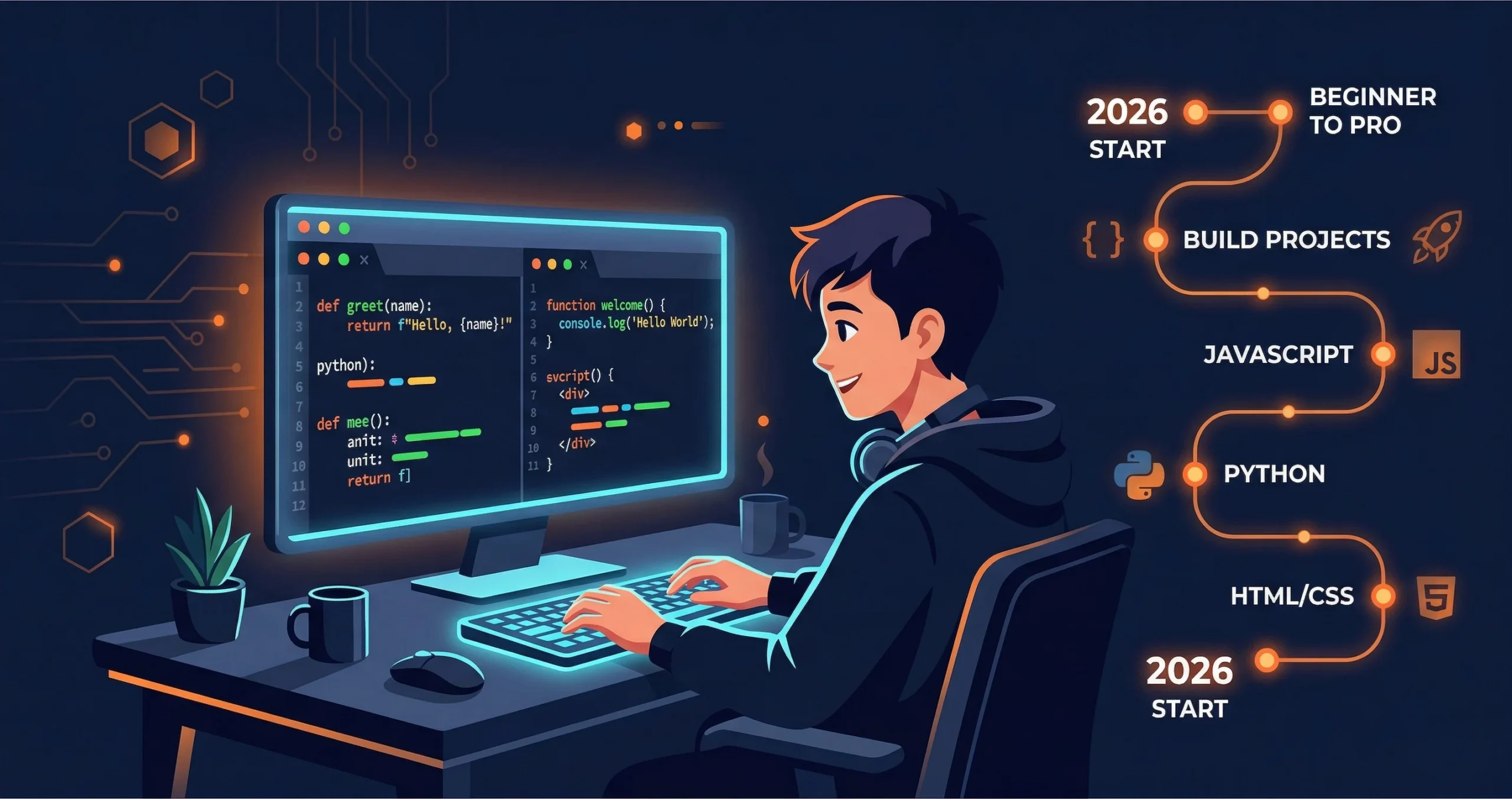
Thinking about career changes or building the next big app is exciting, but staring at a blank screen can feel utterly terrifying. The landscape of technology has shifted massively in recent years, making tech skills more valuable than ever before. Figuring out how to start coding for beginners often feels like trying to read a foreign language while blindfolded.
This guide is designed to cut through the noise and give you a straightforward path to writing your first lines of code. We are skipping the confusing jargon and avoiding those overwhelming textbook explanations that leave you scratching your head. You will find exactly what languages to learn, a realistic timeline, and the precise steps to launch your new journey.
Anyone with enough curiosity and patience can master these skills, regardless of their math background or current job title. All it takes is a willingness to make mistakes and learn from them step by step. Let us dive into the reasons why picking up these skills right now is the absolute best decision you can make for your future.
Why Learning to Code in 2026 Is the Smartest Move You Can Make
Tech jobs are no longer just for people working at massive companies in Silicon Valley. Every business, from your local bakery to global banks, desperately needs people who understand software and digital tools. Writing code gives you the superpower to solve real-world problems and build things completely from scratch. Creating value out of thin air is a skill that will never go out of style.
Artificial intelligence is changing the game, but it is actually making things easier for newcomers instead of taking their jobs. Having AI assistants means you can learn faster, fix errors instantly, and build projects that used to take teams of experts. Understanding how these systems work behind the scenes puts you in the driver’s seat of the future economy. Those who embrace these changes will find endless opportunities for remote work and true financial freedom.
Looking up coding tips for beginners often reveals just how flexible and rewarding a career in tech can be. You do not need an expensive computer science degree to get your foot in the door anymore. Many top companies now care far more about your actual skills and projects than your formal education. Taking that first step today sets you up for a lifetime of continuous learning and earning potential.
Figuring out the best place to begin is usually the hardest part, especially with so many options available.
What Programming Language Should I Learn First?
Choosing your first programming language is like picking your first vehicle—you want something reliable, easy to steer, and widely used. There are dozens of options out there, but two clear winners stand out for absolute beginners in 2026. Python and JavaScript are the absolute best starting points because they are powerful yet remarkably easy to read. Let us break down both options so you can pick the one that perfectly matches your goals.
Python reads almost entirely like plain English, making it incredibly gentle for newcomers trying to understand basic logic. Data science, artificial intelligence, and building the backend of websites all rely heavily on this versatile language. Learning Python lets you focus on core programming concepts without getting bogged down by complicated syntax rules. This language is highly recommended if you want to analyze data, build AI tools, or automate boring daily tasks.
JavaScript is the undisputed king of the web and the secret behind every interactive website you visit daily. Choosing this path allows you to see your visual results immediately, which is incredibly motivating when you are just starting out. You can build mobile apps, web games, and interactive platforms just by mastering this single language. Anyone dreaming of designing beautiful user interfaces or building full websites should definitely start their journey right here.
Quick Comparison Tip Box:
- Choose Python if: You love data, want to explore AI, or prefer writing logic that looks exactly like plain English.
- Choose JavaScript if: You want to build interactive websites, see visual changes instantly, or design stunning user interfaces.
Once you pick a language, you are probably wondering what the actual timeline looks like to reach a comfortable skill level.
How Long Does It Take to Learn Programming?
Everyone learns at their own pace, so you should never compare your chapter one to someone else’s chapter twenty. Mastering a new skill takes consistent effort, but hitting exciting milestones happens much faster than most people think. Setting realistic expectations prevents burnout and keeps you motivated when the material gets a little challenging. Here is an honest, practical timeline of what your amazing journey might look like.
Week one is all about getting comfortable with the basics like variables, loops, and understanding how computers actually think. Reaching the end of month one usually means you can build tiny, text-based games or simple web calculators without much help. Everything will still feel a bit confusing at this stage, but the pieces of the puzzle will slowly start connecting. Celebrating these small wins is crucial for maintaining your momentum.
Hitting the three-month mark is when the magic really starts happening for most dedicated learners. Reading other people’s code becomes much easier, and you will start piecing together larger projects with real confidence. You might even build your first interactive webpage or a program that actually solves a personal problem for you. Consistency starts paying off dramatically as concepts that once felt impossible become complete second nature.
Six months of steady practice is usually enough time to build a solid portfolio of basic projects. Many self-taught developers start applying for internships or junior roles around this milestone if they have been studying intensely. Learning never truly stops in technology, so consider this the point where you are finally fluent enough to read the dictionary.
Knowing the timeline helps, but having a clear map guarantees you actually reach your destination without getting totally lost.
How to start coding for beginners — Your Step by Step Roadmap
Having a clear plan is the difference between giving up after two days and successfully launching a new career. The internet is packed with overwhelming amounts of information, so following a structured path is absolutely vital. This specific roadmap has helped thousands of people transition from complete novices to confident developers. Let us walk through the exact steps you need to take.
- Pick One Goal and Stick to It. Jumping between different languages and tutorials is the fastest way to learn absolutely nothing. Decide if you want to build websites, analyze data, or make mobile apps before you write a single line of text. Focusing on one single direction keeps your mind clear and your progress remarkably steady.
- Start with a Free Interactive Platform. Spending money on expensive bootcamps right away is entirely unnecessary when incredible free resources exist. Websites like freeCodeCamp and Codecademy offer interactive lessons where you type directly into your browser window. Getting your hands dirty immediately builds confidence much faster than passively watching long video lectures.
- Follow a Comprehensive Curriculum. Piecing together random YouTube videos often leaves massive gaps in your foundational knowledge. The Odin Project is a fantastic free resource that gives you a complete, structured path from zero to full-stack web developer. Another incredible option is CS50, Harvard’s free introductory computer science course, which teaches you how to think like a true programmer.
- Practice Daily, Even for Just 20 Minutes. Consistency will always beat intensity when it comes to rewiring your brain for complex problem-solving. Coding for twenty minutes every single day builds stronger habits than cramming for five hours on a Sunday afternoon. Treating this time like a non-negotiable daily appointment guarantees you will see steady, noticeable improvement.
- Build Small, Ugly Projects. Following tutorials perfectly is comforting, but building things completely on your own is where real growth happens. Create a simple to-do list, a digital clock, or a random quote generator without looking at a single guide. The project does not need to look pretty; it just needs to work and be entirely yours.
- Learn How to Search for Answers. Every professional developer uses Google constantly to solve problems and remember specific syntax rules. Mastering the art of searching for exactly what is broken will save you hundreds of hours of frustration. Reading error messages carefully and pasting them into search engines is a fundamental skill you must develop early.
- Join a Beginner Community. Trying to figure out how to start coding for beginners completely alone can feel incredibly isolating. Finding a Discord server or a Reddit community full of other learners provides emotional support and technical help. Asking questions when you are stuck is expected and highly encouraged in the friendly tech world.
Even with the best roadmap, hitting a few speed bumps along the way is totally normal and expected.
Common Mistakes Beginner Programmers Make (And How to Avoid Them)
Stumbling blocks are a completely normal part of mastering any complex new skill. Recognizing these traps early on saves you from massive headaches and keeps your motivation levels incredibly high. The good news is that almost everyone falls into these exact same patterns during their first few months. Here are the biggest pitfalls to watch out for as you begin your exciting journey.
- Falling into “Tutorial Hell.” Watching endless tutorial videos without ever building something on your own creates a false sense of security. Breaking free requires closing the video and attempting to write the logic completely from memory. Getting stuck is exactly how your brain forms the necessary connections to remember the material long-term.
- Trying to Memorize Everything. Programming is an open-book test, so treating it like a vocabulary exam is a massive waste of energy. Professionals look up syntax, formulas, and standard solutions multiple times a day. Focus entirely on understanding the underlying concepts instead of memorizing the exact spelling of specific commands.
- Ignoring the Error Messages. Seeing a giant block of red text on your screen usually triggers an immediate panic response in absolute beginners. Those red lines are actually friendly clues pointing you directly toward the exact solution to your problem. Taking a deep breath and reading the error message slowly will often tell you exactly which line is broken.
- Quitting at the First Major Blockade. Hitting a wall where absolutely nothing makes sense is a universal experience for every single developer. Frustration is merely a sign that your brain is actively stretching and forming brand new neural pathways. Stepping away for a quick walk or getting a good night’s sleep usually solves the problem faster than staring at the screen.
- Comparing Yourself to Professionals. Looking at complex apps built by senior engineers can make your own beginner projects feel completely worthless. Everyone starts out writing messy, clunky programs that barely function properly at first. Celebrate your own amazing progress and remember that even the best experts were once totally confused beginners.
Avoiding these common mistakes is a great start, but applying a few smart strategies will truly turbocharge your progress.
Coding Tips for Beginners That Actually Work
Working smarter is always better than just working harder when you are tackling a steep learning curve. The tech industry moves quickly, and adapting modern strategies gives you a massive advantage over traditional learning methods. Small adjustments to your daily routine can dramatically decrease your overall frustration levels. Try implementing these highly effective tactics into your study schedule starting today.
- Use AI Tools as Your Personal Tutor. Tools like ChatGPT and Claude are absolute game-changers for anyone learning technical skills in 2026. Pasting your broken code into an AI and asking it to explain the error in simple terms saves hours of endless searching. Just make sure you ask the AI to teach you the concept, rather than simply copying and pasting the solution blindly.
- Break Large Problems into Tiny Steps. Looking at a massive project requirement all at once is a guaranteed recipe for immediate anxiety. Breaking the project down into microscopic tasks makes the entire process feel completely manageable. Writing out these tiny steps in plain English before writing actual code is an incredible superpower.
- Comment Your Work Generously. Leaving notes inside your files explaining what specific lines do helps reinforce your understanding of the tricky material. Your future self will be incredibly thankful for these notes when you review the project three weeks later. Explaining the logic in plain text forces you to truly understand the mechanics behind the commands.
- Take Frequent Screen Breaks. Staring at a bright monitor for hours on end ruins your posture, strains your eyes, and clouds your thinking. Utilizing the Pomodoro technique, which involves studying for twenty-five minutes and resting for five, keeps your mind incredibly sharp. Some of the best problem-solving moments happen when you are simply washing dishes or grabbing a glass of water.
- Teach What You Just Learned. Explaining a new concept to a friend, a rubber duck on your desk, or even an empty room solidifies the fresh knowledge. Teaching exposes the hidden gaps in your own understanding very quickly. Writing a short blog post about your daily lessons is another fantastic way to track your amazing progress.
People usually have a few lingering doubts before they finally take the plunge and write their very first script.
Frequently Asked Questions
Q1: Can I learn coding without a math or science degree?
Absolutely yes, you do not need an advanced math background to become a fantastic developer. Most day-to-day programming relies entirely on basic logic, problem-solving, and simple addition or subtraction. Unless you are building complex physics engines for video games, your creativity and persistence matter much more than your algebra skills. Anyone who enjoys solving puzzles will naturally thrive in this environment.
Q2: Is it too late to start coding at 25, 30 or 40?
Age is completely irrelevant when it comes to acquiring valuable technical skills. Companies desperately need mature professionals who bring strong communication and teamwork skills from their previous careers. Many incredible developers wrote their very first lines of logic in their thirties, forties, and even fifties. Your unique life experiences actually give you a massive advantage when designing products for real people.
Q3: How many hours a day should I practice coding?
Spending just one focused hour a day is far more effective than forcing yourself through massive weekend marathons. Consistency builds the necessary muscle memory and allows your brain to absorb the new information while you sleep. Finding a sustainable pace prevents burnout and keeps the learning process highly enjoyable. Even twenty minutes of review during your lunch break makes a huge difference over time.
Q4: Can I get a job after learning to code on my own?
The technology industry is incredibly unique because hiring managers value portfolios significantly more than college diplomas. Building real, functional projects proves to employers that you can actually do the job. Many self-taught developers land fantastic roles simply by showcasing their skills on platforms like GitHub and actively networking. Your dedication and ability to solve problems independently are your strongest selling points.
Final Thoughts on Your New Journey
Stepping into the world of technology opens up a universe where you have the power to build whatever you can imagine. Mastering these skills brings unmatched freedom, whether that means working from a beach, boosting your current salary, or finally launching that app idea you have been dreaming about for years. The initial confusion will eventually fade away, replaced by the incredible thrill of watching your own digital creations come to life. Your future self will be endlessly grateful that you took a deep breath, embraced the challenge, and figured out how to start coding for beginners today.
Leave a Reply