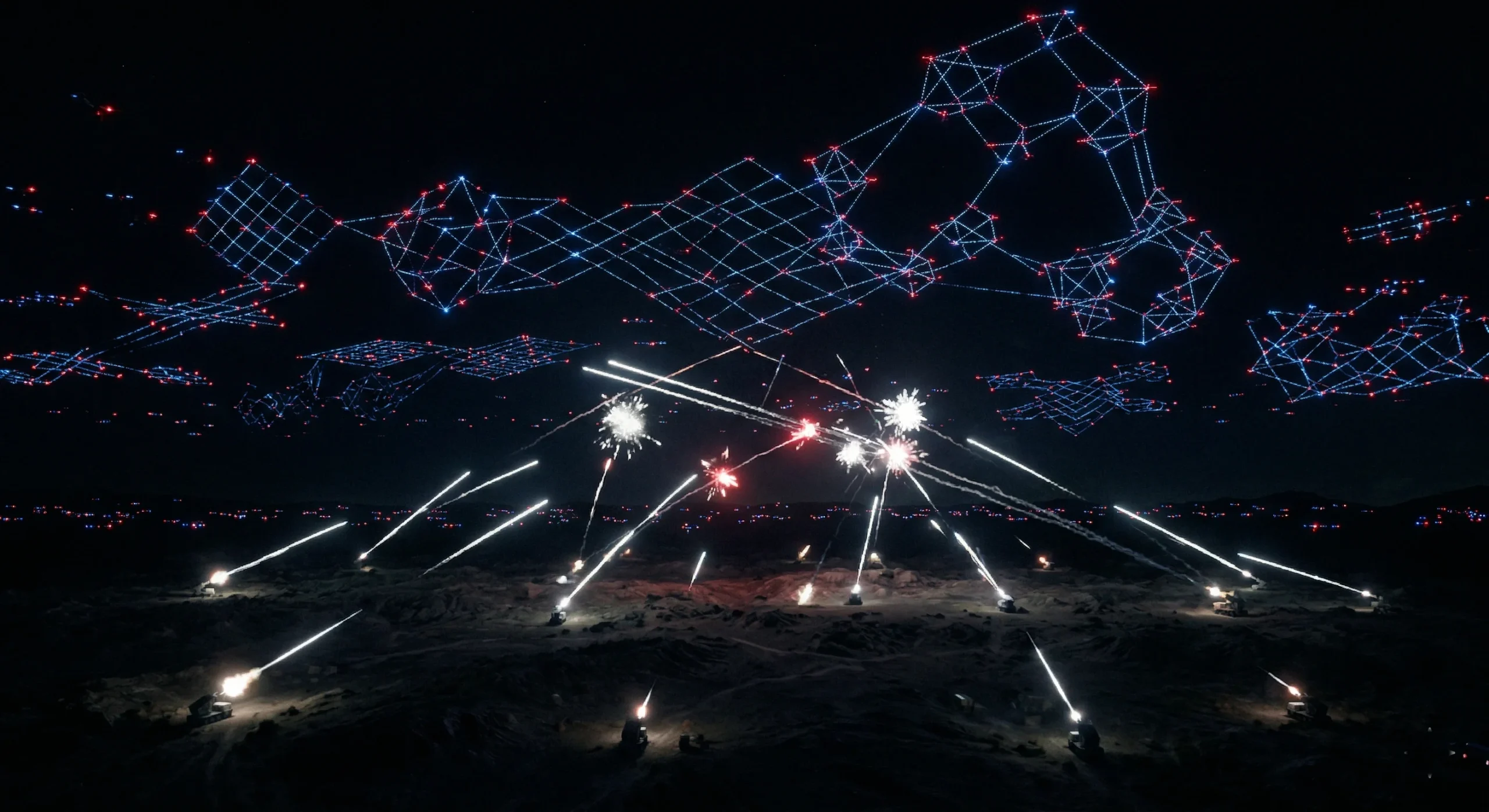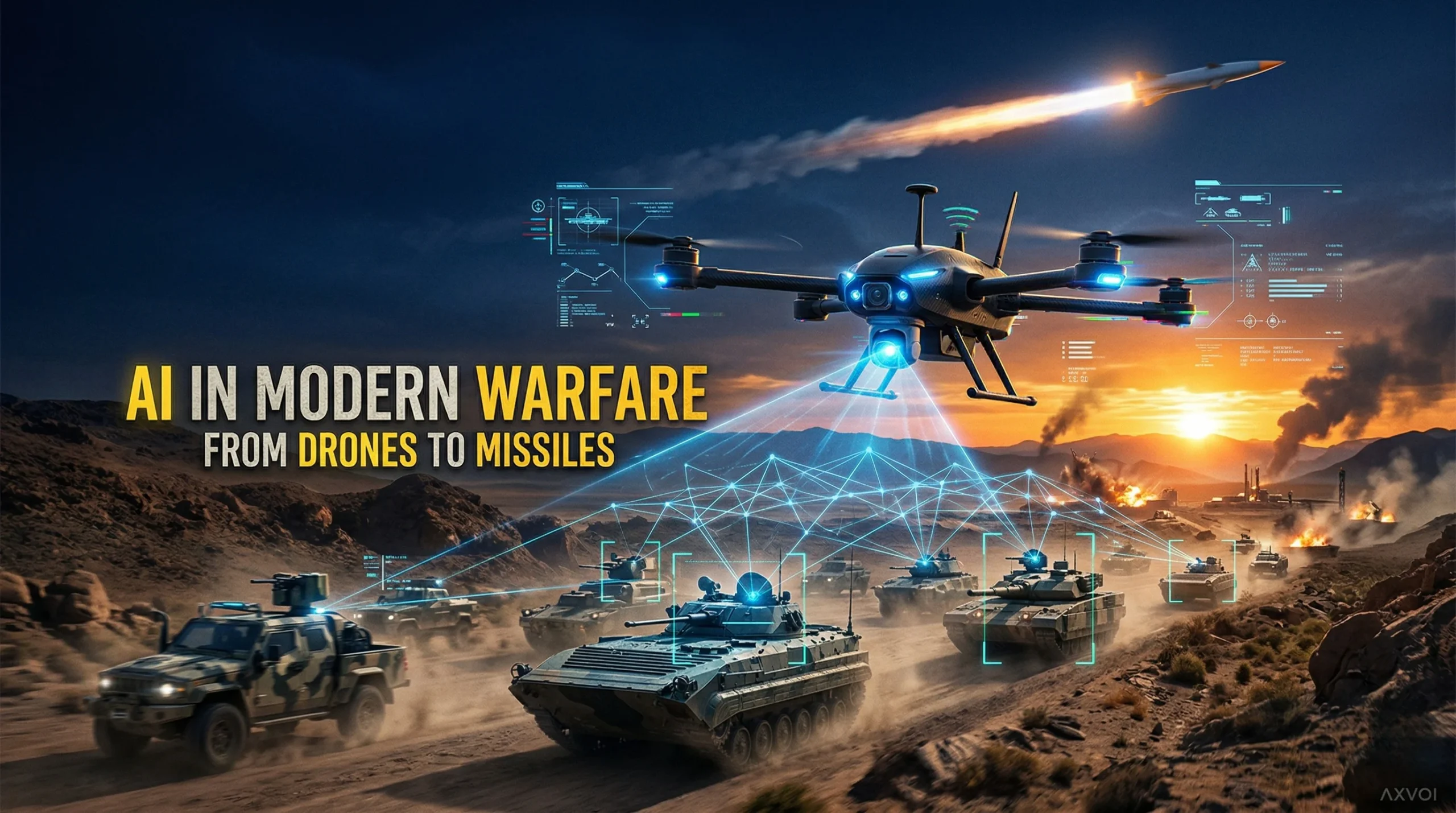
High above a remote, sun-scorched desert canyon, a sleek surveillance aircraft detects a heavily armored convoy, analyzes its complex heat signatures, and instantly calculates a lethal strike trajectory without a single human finger touching a control pad. This chilling, hyper-efficient reality is the immediate dawn of AI in modern warfare, a profound paradigm shift that is fundamentally rewriting the global rules of combat at a blistering pace. The traditional era of commanding generals staring at static paper maps and guessing enemy maneuvers is fading quickly into the forgotten shadows of military history.
Today, Artificial Intelligence is vastly more than a lucrative Silicon Valley tech buzzword; it operates as the cold, calculating digital brains behind an ever-evolving global arsenal of next-generation weaponry. From a silent loitering Military Drone hovering menacingly over contested conflict zones to experimental Autonomous Weapons and the mathematically uncatchable speed of a Hypersonic Missile, intelligent algorithms are unconditionally commanding the skies. Elite geopolitical organizations like DARPA and the Pentagon are aggressively pouring billions of taxpayer dollars into these experimental technologies to secure absolute, unquestionable dominance on the digital battlefield of tomorrow.
This comprehensive breakdown exposes exactly how machine intelligence is transforming global defense strategies, stripping away human error, and terrifyingly accelerating the deadly pace of global conflict. We will critically explore the cutting-edge defense systems shielding our modern cities and intimately examine the profound ethical dilemmas posed by algorithms that hold the power of life and death. To truly grasp the staggering scale of this technological revolution, we must first look to the sky where unmanned flight is undergoing a terrifying evolution.
The Rise of Military AI Drones — From Remote Control to Full Autonomy
For decades, unmanned aerial vehicles explicitly required human pilots sitting safely inside air-conditioned containers thousands of miles away, gripping physical joysticks to execute every single tactical maneuver. Today, advanced micro-processors have transformed the modern military AI drones 2026 deployment models into independent hunters capable of navigating contested airspace, actively dodging radar, and identifying hostile targets entirely on their own. These autonomous airborne hunters communicate seamlessly within massive, decentralized electronic swarms to easily overwhelm enemy air defenses through sheer synchronized volume and devastating speed.
DARPA has served as the primary architectural mastermind of this transition, aggressively pushing the boundaries of autonomous flight through highly secretive test programs that replace human intuition with cold, calculating algorithms. By actively testing experimental fighter jets that aggressively dogfight against human pilots in simulated aerial combat, researchers are successfully proving that combat software can mathematically outmaneuver the most highly trained fighter aces.
“The battlefield has rendered its verdict; mass-produced, autonomous platforms now deliver what billion-dollar weapons systems once handled exclusively.” — DefenseScoop Magazine
As we approach highly anticipated future deployment milestones, the defense industry focus is rapidly shifting from building expensive physical hardware to developing the most ruthless and efficient software brains. The global militaries that manage to control the best artificial neural networks will inherently control the physical skies of tomorrow with absolute impunity. This aggressive, software-first mentality is bleeding into every single aspect of the global arsenal, fundamentally changing how airborne projectiles independently acquire and destroy their targets.
AI Guided Missiles Technology — Weapons That Think for Themselves
The historical military concept of “fire and forget” has evolved into something deeply terrifying thanks to AI guided missiles technology, which transforms static projectiles into predatory, learning machines. Instead of simply following a pre-programmed and easily jammed GPS coordinate, these smart munitions use onboard Machine Learning algorithms to analyze terrain, visually identify shifting targets, and alter their flight paths mid-air. This incredible capability means that even if an enemy vehicle attempts to desperately hide or deploy electronic countermeasures, the missile can autonomously recalculate its trajectory in milliseconds to ensure a lethal strike.
Massive global defense contractors are pushing these autonomous capabilities to staggering extremes, fundamentally changing the baseline survivability of high-value operational assets currently deployed on the ground. Lockheed Martin operates at the absolute forefront of this integration, embedding intelligent tracking systems into interceptors to guarantee pinpoint precision strikes against incredibly fast and deeply evasive hostile targets. Their highly advanced engineering allows these modern weapons to constantly update their threat assessments while hurtling violently through the upper atmosphere at completely blinding speeds.
The functional integration of intelligent programming becomes terrifyingly necessary when systematically applied to a Hypersonic Missile, which violently travels at over five times the blistering speed of sound. At Mach 5 velocities, organic human reaction time is entirely useless, meaning the missile itself must independently think, navigate, and evade enemy radar autonomously while engulfed in a glowing plasma sheath of intense heat. Defending against these blistering, digitally intelligent weapons requires a defensive shield that operates continuously at an equally staggering machine speed.
Artificial Intelligence Defense Systems — Protecting Nations at Machine Speed
When supersonic ballistic threats literally rain down from the sky, organic human operators simply cannot calculate intercept trajectories fast enough to deploy effective and life-saving countermeasures. This unavoidable biological limitation is exactly why modern militaries desperately rely on artificial intelligence defense systems to instantly categorize incoming projectiles, mathematically predict their exact impact zones, and launch interceptors before a human even registers the alarm. By completely eliminating the deadly, inherent delay of human hesitation, these algorithmic shields provide an unprecedented, robust layer of security for vulnerable civilian populations living in active warzones.
The world’s most proven and famous example is Israel’s Iron Dome, an aerospace engineering marvel that relies heavily on complex algorithmic models to efficiently separate actual lethal threats from harmless falling debris. As hostile rockets launch, the defense system instantly calculates whether the projectile will harmlessly hit an empty desert field or catastrophically strike a densely populated city, actively conserving valuable interceptor missiles for genuine emergencies.
“Iron Dome is the closest system you have to real automation, processing threat data in fractions of a second to decide if interception is necessary.” — The International Law Forum
Beyond atmospheric missile interception, the future of warfare AI is heavily revolutionizing overall Battlefield Surveillance by seamlessly linking orbital satellites, ground sensors, and high-altitude aerial drones into a single, cohesive neural network. This massive, planetary-scale data fusion allows military commanders to see directly through the proverbial fog of war in real time, automatically flagging enemy troop movements, hidden artillery batteries, and logistical supply lines. While these defensive surveillance technologies provide immense tactical advantages, the escalating global superpower competition is quietly pushing the boundaries of what these automated systems are legally allowed to do.
The Pentagon and DARPA — Who Is Leading the AI in modern warfare Arms Race?
The United States government recently and officially recognized that absolute software superiority will unequivocally determine the absolute victor of all future, large-scale global military conflicts. Consequently, the Pentagon aggressively adopted an uncompromising “AI-First” doctrine, discreetly funneling billions of operational dollars into highly secretive initiatives designed to radically optimize targeting systems and global logistics. This massive, unprecedented influx of capital is specifically designed to guarantee that the American military apparatus effectively outpaces its greatest geopolitical rivals in the looming, high-stakes algorithmic arms race.
Working quietly in the shadows, DARPA continues to heavily fund the most experimental and historically high-risk applications of AI in modern warfare, deliberately treating advanced algorithms as synthetic colleagues rather than simple, disposable tools. Their elite researchers are actively developing ambitious “third wave” cognitive intelligence, which ultimately aims to create autonomous machines capable of understanding nuanced context, reasoning through chaotic environments, and logically explaining their own life-or-death decisions.
However, America is definitely not running this high-stakes digital race uncontested; powerful nations like China and Russia are heavily investing in swarming munitions and automated defense networks to directly challenge Western technological supremacy. This desperate, well-funded scramble to completely dominate the global Autonomous Weapons sector heavily resembles the terrifying nuclear arms race of the Cold War, but moving exponentially faster at the speed of software updates. As these incredibly powerful nations eagerly hand over the physical keys of destruction to complex, unfeeling code, a profound moral and ethical crisis is rapidly brewing on the horizon.
The Ethical Battlefield — Should Autonomous Weapons Make Life and Death Decisions?
The terrifying, uncompromising efficiency of algorithmic combat brings us directly to the most fiercely debated, deeply uncomfortable moral dilemma of the twenty-first century. Proponents logically argue that replacing exhausted, terrified human soldiers with cold, calculating algorithms will drastically reduce accidental collateral damage and ultimately save countless innocent civilian lives on the battlefield. They passionately believe an unfeeling machine will never act out of blind anger, seek personal revenge, or mistakenly commit a horrific war crime in the heat of a chaotic, bloody firefight.
Conversely, prominent international human rights advocates are deeply terrified by the looming prospect of deploying heavily armed Autonomous Weapons that legally possess the absolute authority to execute human targets without any ethical oversight. They correctly argue that complex algorithms are highly susceptible to hidden data bias, digital hallucination, and visual misidentification, meaning a simple, unforeseen software glitch could easily result in an unintended massacre of innocents.
“When systems developed for military applications involve lethal force without clear rules, ethical boundaries are left to be dangerously negotiated in real time.” — Americans for Responsible Innovation
International humanitarian law remains woefully unprepared for the rapid, unchecked deployment of these intelligent slaughter machines, leaving a massive, highly dangerous policy vacuum that ambitious militaries are incredibly eager to exploit. The United Nations continuously attempts to debate restrictive treaties regarding “killer robots,” but the geopolitical incentives to deploy superior, life-saving technology consistently overpower the fragile, bureaucratic calls for moral restraint. The legal and ethical frameworks we desperately establish today will undoubtedly define the fragile survival of our humanity as we blindly march into an uncertain, highly automated tomorrow.
The Future of Warfare AI — What the Next 10 Years Look Like
Peering anxiously into the highly volatile next decade, the future of warfare AI promises a terrifying battlefield where physical, organic human combatants are largely rendered obsolete, replaced entirely by highly efficient synthetic proxies. Leading geopolitical experts deeply analyzing military AI drones 2026 projections confidently predict the widespread, undeniable deployment of interconnected autonomous swarms that operate flawlessly with a terrifying, unified hive-mind intelligence. These electronic swarms will seamlessly overwhelm advanced enemy radar, systematically dismantle physical power infrastructure, and completely paralyze communication networks significantly faster than any human general can mentally react.
Furthermore, invisible cyber warfare will merge completely and flawlessly with physical kinetic operations, allowing military AI to orchestrate synchronized digital blackouts mere seconds before launching devastatingly precise kinetic hypersonic strikes. We will helplessly witness artificial intelligence actively and aggressively managing the entire military kill chain, strictly from initial satellite threat detection to the final, fatal deployment of specialized, armor-piercing munitions.
Space-based defense architectures will also rely entirely on untiring algorithms to endlessly track hostile communication satellites and dangerous orbital debris, effectively expanding the theater of war far beyond Earth’s fragile atmosphere. The ultimate, undisputed victor in this rapidly approaching, hyper-digital reality will not be the wealthy nation with the largest standing human army, but the one possessing the absolute most resilient and imaginative code. With these profound, reality-altering shifts violently unfolding before our very eyes, certain pressing, deeply important questions demand immediate and absolute clarity.
Frequently Asked Questions
What is AI in modern warfare and how is it being used right now?
AI in modern warfare specifically refers to the tactical integration of advanced machine learning algorithms into military operations to wildly accelerate combat decision-making, enhance targeting accuracy, and autonomously pilot unmanned vehicles. Currently, global militaries use it extensively and aggressively for processing vast amounts of satellite surveillance data, mathematically predicting enemy troop movements, and executing precision tactical strikes with autonomous drones. It essentially acts as a massive, untiring force multiplier, allowing commanders to perfectly manage complex battlefields with unprecedented digital efficiency.
Are autonomous weapons legal under international law?
The specific legality of entirely autonomous weapons remains a highly contested and extremely ambiguous gray area under current international humanitarian law conventions. While there is currently no specific global treaty explicitly banning “killer robots,” dedicated human rights organizations forcefully argue they violate fundamental principles of combat distinction and civilian proportionality. Major global military powers have strongly and consistently resisted signing binding bans, vastly preferring to establish their own internal, highly classified ethical guidelines regarding human oversight.
How does the Iron Dome use AI to intercept missiles?
Israel’s famous Iron Dome utilizes highly sophisticated machine learning algorithms perfectly paired with advanced battlefield radar to instantly track the exact trajectory of incoming enemy rockets. In microscopic fractions of a second, the defense system calculates exactly where the projectile will impact, actively and smartly ignoring those destined for completely unpopulated desert areas. It then automatically commands physical interceptor missiles to launch and reliably destroy only the genuine, life-threatening rockets, saving both invaluable civilian lives and highly expensive ammunition.
What is DARPA’s role in developing military AI?
DARPA effectively acts as the primary, highly secretive research and development arm of the United States military, specifically tasked with completely preventing technological surprise from highly advanced foreign adversaries. They heavily fund incredibly experimental projects, including autonomous dogfighting fighter jets, complex swarming drone logic, and next-generation cognitive computing designed to deeply understand complex battlefield context. Their ultimate, stated goal is to fully evolve military algorithms from simple programmed tools into fully capable, highly synthetic battlefield colleagues.
Will AI replace human soldiers on the battlefield?
While artificial intelligence will likely never entirely eliminate the critical need for human strategic oversight, it will drastically and permanently reduce the physical presence of organic frontline infantry. Autonomous, armored machines will increasingly handle extreme high-risk missions like violently breaching enemy lines, meticulously clearing active minefields, and executing long-range aerial dogfights in heavily contested zones. Ultimately, human soldiers will safely transition from frontline triggers-pullers into remote, highly trained supervisors managing vast, global networks of intelligent robotic proxies.
Conclusion
The relentless, unavoidable integration of AI in modern warfare absolutely guarantees that the devastating, large-scale conflicts of tomorrow will be fought, decided, and concluded in the microscopic fractions of a second it takes a micro-processor to execute a lethal command. As brilliantly intelligent algorithms systematically strip the deeply human elements of hesitation, fear, and mercy from the active battlefield, the globe nervously stands on the precipice of a terrifyingly efficient new epoch of pure destruction. We are rapidly and irreversibly engineering a stark reality where the absolute sharpest, most deadly weapon is no longer forged from physical steel, but meticulously compiled in cold lines of autonomous code. The ultimate, haunting question is no longer whether intelligent machines will inevitably wage our global wars, but whether humanity will actually survive the terrifying, flawless perfection of their algorithmic logic.
References
Wikipedia — 2026 Iran War — en.wikipedia.org/wiki/2026_Iran_war
Al Jazeera — Iran War Day 33 US Israel Attacks April 2026 — aljazeera.com
CNN — Trump Says Iran War Nearing Completion April 2 2026 — cnn.com
Britannica — 2026 Iran War Overview April 2026 — britannica.com
AP News — US Airstrikes Iran Military Targets 2026 — apnews.com
Reuters — AI Weapons Used in Iran Conflict 2026 — reuters.com
BBC News — US Israel Strike Iran February 2026 — bbc.com
The Guardian — AI Drones Iran War 2026 — theguardian.com