Author: danitech057@gmail.com

  • How to Check If a Website Is Safe Before You Click

    How to Check If a Website Is Safe Before You Click

    Picture this: you’re scrolling through social media when an ad for those expensive sneakers you’ve been eyeing pops up, priced at an unbelievable 80% off. Your heart races as you click the link, but a nagging thought suddenly hits you—how to check if a website is safe before handing over your credit card details? It’s a scenario almost everyone has faced, hovering your mouse over a link and wondering if it’s going to lead to a sweet deal or a complete disaster.

    The truth is, cybercriminals are getting smarter every single day, creating duplicate storefronts and malicious links that look virtually identical to the real thing. This growing threat of online fraud means that relying purely on your gut feeling is no longer enough to protect your hard-earned money and personal data. Every internet user, regardless of their technical skills, needs to understand how to navigate around these digital traps.

    In this guide, you will learn exactly what to look for before you ever hit that checkout button or type in your password. We’ll break down the warning signs of fraudulent pages and give you simple, actionable tools you can use immediately. By the time you finish reading, you’ll have the confidence to browse, shop, and click without fear.

    Look Beyond the Padlock: The Basics of HTTPS

    For years, we were taught that a simple visual check was enough to guarantee our security. While looking at your browser’s address bar is a great first step, it is only part of the puzzle.

    What HTTPS Actually Means

    When you look at a web address, you should see HTTPS rather than just HTTP. That extra “S” stands for “Secure.” It indicates that the site has an active SSL Certificate, which encrypts the data passing between your computer and the website’s server. When this encryption is active, you will typically see a little Padlock Icon next to the URL.

    However, you need to know a very important caveat:

    “A secure padlock doesn’t guarantee a safe site; it just guarantees your connection to that site is encrypted. Cybercriminals use encryption too, which is why verifying the actual domain is critical to your online safety.” — National Cybersecurity Alliance

    Because scammers can easily obtain an SSL Certificate for a fake site, seeing the Padlock Icon doesn’t mean the people running the site are honest. It just means the data you send them—like your credit card numbers—is securely transmitted to the scammers.

    How to Check If a Website Is Safe Using Dedicated Tools

    When your eyes deceive you, let technology do the heavy lifting. If you are wondering how to tell if a website is legit, your best bet is to use an automated website safety checker. These tools scan URLs against massive databases of known threats.

    Top Safety Checkers You Can Use Right Now

    • Google Safe Browsing: This is a fantastic, free tool provided by Google. You simply paste the URL into their transparency report page, and it will instantly tell you if the site is currently hosting anything dangerous.
    • VirusTotal: If you want a deep dive, this is your go-to platform. VirusTotal analyzes suspicious files and URLs to detect types of Malware and malicious breaches. It aggregates data from dozens of antivirus scanners into one easy-to-read report.
    • URLVoid: This service cross-references a website against multiple blacklist engines. It gives you a detailed safety report and helps you quickly spot malicious behavior.
    • Norton Safe Web: Powered by a trusted name in cybersecurity, this tool analyzes sites to see how they will affect your computer. It checks for computer threats, identity threats, and annoyance factors.

    Whenever you feel a spike of doubt, pause and run the link through a website safety checker. It takes five seconds and could save you hours of headaches.

    Investigate the Domain Age and Registration

    Scam websites usually don’t last very long. Cybercriminals set them up, rip people off, and abandon them as soon as they get caught or blocked by internet service providers. Because of this “burn and churn” tactic, checking a site’s history is incredibly revealing.

    Why Domain Age Matters

    If you are looking at an online store claiming to have thousands of five-star reviews, but you find out the website was registered just three days ago, you have spotted a major red flag. Checking the Domain Age is a foolproof way to verify a company’s claims. You can use free “WHOIS” lookup tools online to see exactly when a domain was registered and who owns it. Legitimate businesses generally have older, established domain histories.

    Trust Your Eyes: How to Spot a Fake Website

    Sometimes, the best defense against digital threats is plain old common sense. Phishing attacks rely heavily on creating a sense of urgency and hoping you don’t look too closely at the details. If you slow down, the cracks in their facade become obvious.

    Red Flags to Watch For

    • Weird URLs: Scammers love to use typosquatting. You might think you are visiting “amazon.com,” but a closer look reveals you are actually on “arnazon.com” (using an ‘r’ and an ‘n’). Always double-check the spelling in the address bar.
    • Poor Grammar and Spelling: Legitimate companies have editors and marketing teams. If a homepage is riddled with awkward phrasing, weird formatting, and obvious spelling mistakes, close the tab immediately.
    • Unbelievable Deals: We all love a bargain, but if a brand new laptop is selling for $40, you aren’t getting a deal—you are getting robbed.
    • Strange Payment Methods: If an online retailer insists you pay via wire transfer, cryptocurrency, or gift cards, walk away. These methods are untraceable and non-refundable.

    If you are ever unsure about how to check if a website is safe, take a step back and evaluate the overall quality of the page. If it feels cheap, rushed, or overly aggressive in demanding your personal info, it is likely a scam.

    Protect Your Devices from Hidden Threats

    Sometimes you don’t even have to type in your password to become a victim. Merely visiting a compromised website can silently download Malware onto your device in the background. This is known as a “drive-by download.”

    To prevent this, you should always keep your web browser and operating system updated to the latest versions. Modern browsers have excellent built-in defenses that will physically block you from entering known malicious sites. Combine these automated defenses with your new knowledge of how to check if a website is safe, and you create an incredibly strong shield against online criminals.

    Take Control of Your Digital Safety

    You hold the keys to your digital security, and navigating the web doesn’t have to feel like walking through a minefield. By pausing for just a few seconds to run these visual checks and utilize safety tools, you lock the door on cybercriminals and protect your peace of mind. Stay vigilant, trust your instincts when a deal looks too good to be true, and never let scammers have the last laugh.


    Meta Description: Wondering how to check if a website is safe? Read our expert guide to spot fake links, avoid scams, use safety checkers, and browse the internet securely.

  • From Drones to Missiles: How AI Is Rewriting the Rules of Modern Warfare

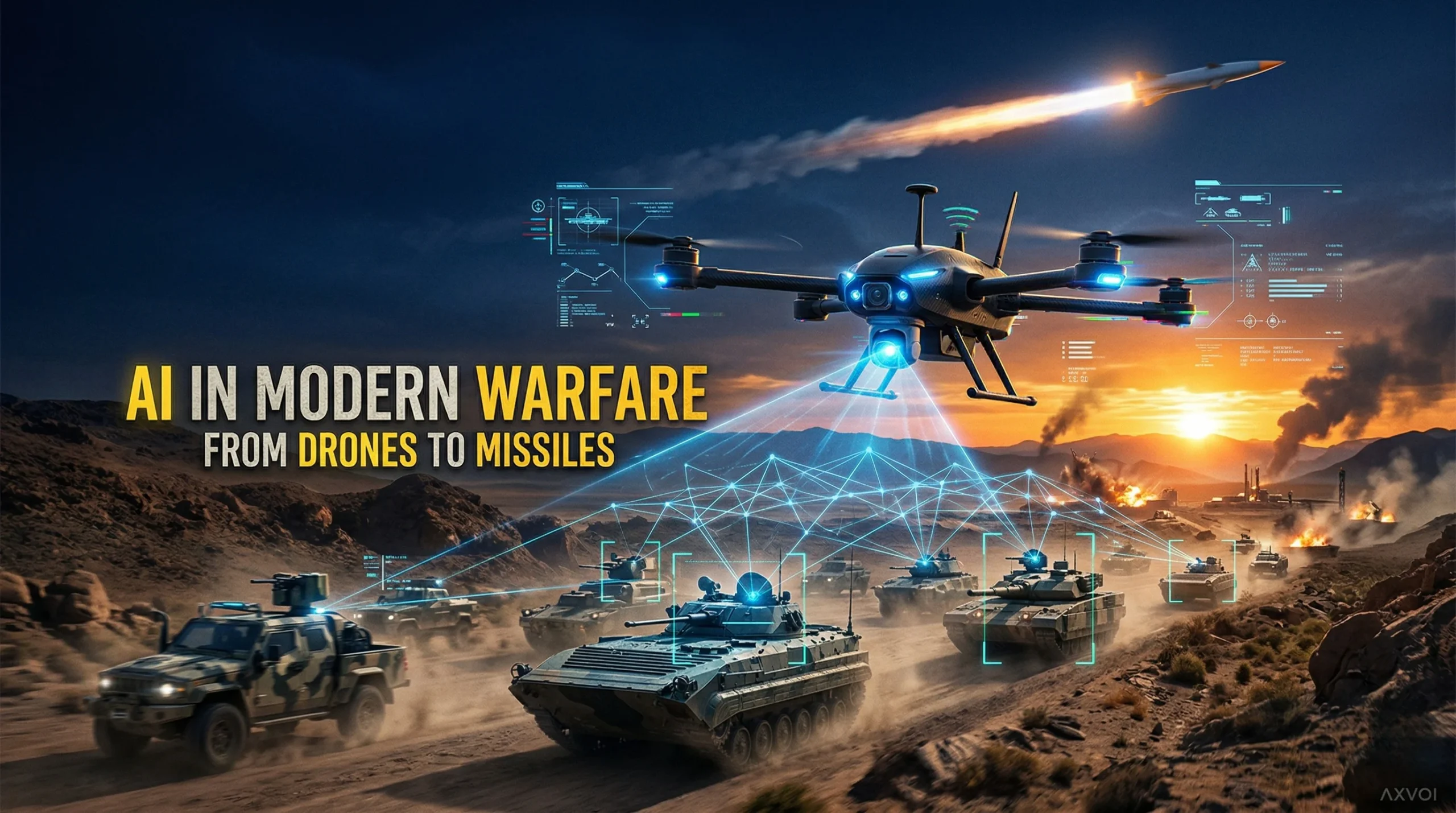
    From Drones to Missiles: How AI Is Rewriting the Rules of Modern Warfare

    High above a remote, sun-scorched desert canyon, a sleek surveillance aircraft detects a heavily armored convoy, analyzes its complex heat signatures, and instantly calculates a lethal strike trajectory without a single human finger touching a control pad. This chilling, hyper-efficient reality is the immediate dawn of AI in modern warfare, a profound paradigm shift that is fundamentally rewriting the global rules of combat at a blistering pace. The traditional era of commanding generals staring at static paper maps and guessing enemy maneuvers is fading quickly into the forgotten shadows of military history.

    Today, Artificial Intelligence is vastly more than a lucrative Silicon Valley tech buzzword; it operates as the cold, calculating digital brains behind an ever-evolving global arsenal of next-generation weaponry. From a silent loitering Military Drone hovering menacingly over contested conflict zones to experimental Autonomous Weapons and the mathematically uncatchable speed of a Hypersonic Missile, intelligent algorithms are unconditionally commanding the skies. Elite geopolitical organizations like DARPA and the Pentagon are aggressively pouring billions of taxpayer dollars into these experimental technologies to secure absolute, unquestionable dominance on the digital battlefield of tomorrow.

    This comprehensive breakdown exposes exactly how machine intelligence is transforming global defense strategies, stripping away human error, and terrifyingly accelerating the deadly pace of global conflict. We will critically explore the cutting-edge defense systems shielding our modern cities and intimately examine the profound ethical dilemmas posed by algorithms that hold the power of life and death. To truly grasp the staggering scale of this technological revolution, we must first look to the sky where unmanned flight is undergoing a terrifying evolution.

    The Rise of Military AI Drones — From Remote Control to Full Autonomy

    For decades, unmanned aerial vehicles explicitly required human pilots sitting safely inside air-conditioned containers thousands of miles away, gripping physical joysticks to execute every single tactical maneuver. Today, advanced micro-processors have transformed the modern military AI drones 2026 deployment models into independent hunters capable of navigating contested airspace, actively dodging radar, and identifying hostile targets entirely on their own. These autonomous airborne hunters communicate seamlessly within massive, decentralized electronic swarms to easily overwhelm enemy air defenses through sheer synchronized volume and devastating speed.

    DARPA has served as the primary architectural mastermind of this transition, aggressively pushing the boundaries of autonomous flight through highly secretive test programs that replace human intuition with cold, calculating algorithms. By actively testing experimental fighter jets that aggressively dogfight against human pilots in simulated aerial combat, researchers are successfully proving that combat software can mathematically outmaneuver the most highly trained fighter aces.

    “The battlefield has rendered its verdict; mass-produced, autonomous platforms now deliver what billion-dollar weapons systems once handled exclusively.” — DefenseScoop Magazine

    As we approach highly anticipated future deployment milestones, the defense industry focus is rapidly shifting from building expensive physical hardware to developing the most ruthless and efficient software brains. The global militaries that manage to control the best artificial neural networks will inherently control the physical skies of tomorrow with absolute impunity. This aggressive, software-first mentality is bleeding into every single aspect of the global arsenal, fundamentally changing how airborne projectiles independently acquire and destroy their targets.

    AI Guided Missiles Technology — Weapons That Think for Themselves

    The historical military concept of “fire and forget” has evolved into something deeply terrifying thanks to AI guided missiles technology, which transforms static projectiles into predatory, learning machines. Instead of simply following a pre-programmed and easily jammed GPS coordinate, these smart munitions use onboard Machine Learning algorithms to analyze terrain, visually identify shifting targets, and alter their flight paths mid-air. This incredible capability means that even if an enemy vehicle attempts to desperately hide or deploy electronic countermeasures, the missile can autonomously recalculate its trajectory in milliseconds to ensure a lethal strike.

    Massive global defense contractors are pushing these autonomous capabilities to staggering extremes, fundamentally changing the baseline survivability of high-value operational assets currently deployed on the ground. Lockheed Martin operates at the absolute forefront of this integration, embedding intelligent tracking systems into interceptors to guarantee pinpoint precision strikes against incredibly fast and deeply evasive hostile targets. Their highly advanced engineering allows these modern weapons to constantly update their threat assessments while hurtling violently through the upper atmosphere at completely blinding speeds.

    The functional integration of intelligent programming becomes terrifyingly necessary when systematically applied to a Hypersonic Missile, which violently travels at over five times the blistering speed of sound. At Mach 5 velocities, organic human reaction time is entirely useless, meaning the missile itself must independently think, navigate, and evade enemy radar autonomously while engulfed in a glowing plasma sheath of intense heat. Defending against these blistering, digitally intelligent weapons requires a defensive shield that operates continuously at an equally staggering machine speed.

    Artificial Intelligence Defense Systems — Protecting Nations at Machine Speed

    When supersonic ballistic threats literally rain down from the sky, organic human operators simply cannot calculate intercept trajectories fast enough to deploy effective and life-saving countermeasures. This unavoidable biological limitation is exactly why modern militaries desperately rely on artificial intelligence defense systems to instantly categorize incoming projectiles, mathematically predict their exact impact zones, and launch interceptors before a human even registers the alarm. By completely eliminating the deadly, inherent delay of human hesitation, these algorithmic shields provide an unprecedented, robust layer of security for vulnerable civilian populations living in active warzones.

    The world’s most proven and famous example is Israel’s Iron Dome, an aerospace engineering marvel that relies heavily on complex algorithmic models to efficiently separate actual lethal threats from harmless falling debris. As hostile rockets launch, the defense system instantly calculates whether the projectile will harmlessly hit an empty desert field or catastrophically strike a densely populated city, actively conserving valuable interceptor missiles for genuine emergencies.

    “Iron Dome is the closest system you have to real automation, processing threat data in fractions of a second to decide if interception is necessary.” — The International Law Forum

    Beyond atmospheric missile interception, the future of warfare AI is heavily revolutionizing overall Battlefield Surveillance by seamlessly linking orbital satellites, ground sensors, and high-altitude aerial drones into a single, cohesive neural network. This massive, planetary-scale data fusion allows military commanders to see directly through the proverbial fog of war in real time, automatically flagging enemy troop movements, hidden artillery batteries, and logistical supply lines. While these defensive surveillance technologies provide immense tactical advantages, the escalating global superpower competition is quietly pushing the boundaries of what these automated systems are legally allowed to do.

    The Pentagon and DARPA — Who Is Leading the AI in modern warfare Arms Race?

    The United States government recently and officially recognized that absolute software superiority will unequivocally determine the absolute victor of all future, large-scale global military conflicts. Consequently, the Pentagon aggressively adopted an uncompromising “AI-First” doctrine, discreetly funneling billions of operational dollars into highly secretive initiatives designed to radically optimize targeting systems and global logistics. This massive, unprecedented influx of capital is specifically designed to guarantee that the American military apparatus effectively outpaces its greatest geopolitical rivals in the looming, high-stakes algorithmic arms race.

    Working quietly in the shadows, DARPA continues to heavily fund the most experimental and historically high-risk applications of AI in modern warfare, deliberately treating advanced algorithms as synthetic colleagues rather than simple, disposable tools. Their elite researchers are actively developing ambitious “third wave” cognitive intelligence, which ultimately aims to create autonomous machines capable of understanding nuanced context, reasoning through chaotic environments, and logically explaining their own life-or-death decisions.

    However, America is definitely not running this high-stakes digital race uncontested; powerful nations like China and Russia are heavily investing in swarming munitions and automated defense networks to directly challenge Western technological supremacy. This desperate, well-funded scramble to completely dominate the global Autonomous Weapons sector heavily resembles the terrifying nuclear arms race of the Cold War, but moving exponentially faster at the speed of software updates. As these incredibly powerful nations eagerly hand over the physical keys of destruction to complex, unfeeling code, a profound moral and ethical crisis is rapidly brewing on the horizon.

    The Ethical Battlefield — Should Autonomous Weapons Make Life and Death Decisions?

    The terrifying, uncompromising efficiency of algorithmic combat brings us directly to the most fiercely debated, deeply uncomfortable moral dilemma of the twenty-first century. Proponents logically argue that replacing exhausted, terrified human soldiers with cold, calculating algorithms will drastically reduce accidental collateral damage and ultimately save countless innocent civilian lives on the battlefield. They passionately believe an unfeeling machine will never act out of blind anger, seek personal revenge, or mistakenly commit a horrific war crime in the heat of a chaotic, bloody firefight.

    Conversely, prominent international human rights advocates are deeply terrified by the looming prospect of deploying heavily armed Autonomous Weapons that legally possess the absolute authority to execute human targets without any ethical oversight. They correctly argue that complex algorithms are highly susceptible to hidden data bias, digital hallucination, and visual misidentification, meaning a simple, unforeseen software glitch could easily result in an unintended massacre of innocents.

    “When systems developed for military applications involve lethal force without clear rules, ethical boundaries are left to be dangerously negotiated in real time.” — Americans for Responsible Innovation

    International humanitarian law remains woefully unprepared for the rapid, unchecked deployment of these intelligent slaughter machines, leaving a massive, highly dangerous policy vacuum that ambitious militaries are incredibly eager to exploit. The United Nations continuously attempts to debate restrictive treaties regarding “killer robots,” but the geopolitical incentives to deploy superior, life-saving technology consistently overpower the fragile, bureaucratic calls for moral restraint. The legal and ethical frameworks we desperately establish today will undoubtedly define the fragile survival of our humanity as we blindly march into an uncertain, highly automated tomorrow.

    The Future of Warfare AI — What the Next 10 Years Look Like

    Peering anxiously into the highly volatile next decade, the future of warfare AI promises a terrifying battlefield where physical, organic human combatants are largely rendered obsolete, replaced entirely by highly efficient synthetic proxies. Leading geopolitical experts deeply analyzing military AI drones 2026 projections confidently predict the widespread, undeniable deployment of interconnected autonomous swarms that operate flawlessly with a terrifying, unified hive-mind intelligence. These electronic swarms will seamlessly overwhelm advanced enemy radar, systematically dismantle physical power infrastructure, and completely paralyze communication networks significantly faster than any human general can mentally react.

    Furthermore, invisible cyber warfare will merge completely and flawlessly with physical kinetic operations, allowing military AI to orchestrate synchronized digital blackouts mere seconds before launching devastatingly precise kinetic hypersonic strikes. We will helplessly witness artificial intelligence actively and aggressively managing the entire military kill chain, strictly from initial satellite threat detection to the final, fatal deployment of specialized, armor-piercing munitions.

    Space-based defense architectures will also rely entirely on untiring algorithms to endlessly track hostile communication satellites and dangerous orbital debris, effectively expanding the theater of war far beyond Earth’s fragile atmosphere. The ultimate, undisputed victor in this rapidly approaching, hyper-digital reality will not be the wealthy nation with the largest standing human army, but the one possessing the absolute most resilient and imaginative code. With these profound, reality-altering shifts violently unfolding before our very eyes, certain pressing, deeply important questions demand immediate and absolute clarity.

    Frequently Asked Questions

    What is AI in modern warfare and how is it being used right now?

    AI in modern warfare specifically refers to the tactical integration of advanced machine learning algorithms into military operations to wildly accelerate combat decision-making, enhance targeting accuracy, and autonomously pilot unmanned vehicles. Currently, global militaries use it extensively and aggressively for processing vast amounts of satellite surveillance data, mathematically predicting enemy troop movements, and executing precision tactical strikes with autonomous drones. It essentially acts as a massive, untiring force multiplier, allowing commanders to perfectly manage complex battlefields with unprecedented digital efficiency.

    Are autonomous weapons legal under international law?

    The specific legality of entirely autonomous weapons remains a highly contested and extremely ambiguous gray area under current international humanitarian law conventions. While there is currently no specific global treaty explicitly banning “killer robots,” dedicated human rights organizations forcefully argue they violate fundamental principles of combat distinction and civilian proportionality. Major global military powers have strongly and consistently resisted signing binding bans, vastly preferring to establish their own internal, highly classified ethical guidelines regarding human oversight.

    How does the Iron Dome use AI to intercept missiles?

    Israel’s famous Iron Dome utilizes highly sophisticated machine learning algorithms perfectly paired with advanced battlefield radar to instantly track the exact trajectory of incoming enemy rockets. In microscopic fractions of a second, the defense system calculates exactly where the projectile will impact, actively and smartly ignoring those destined for completely unpopulated desert areas. It then automatically commands physical interceptor missiles to launch and reliably destroy only the genuine, life-threatening rockets, saving both invaluable civilian lives and highly expensive ammunition.

    What is DARPA’s role in developing military AI?

    DARPA effectively acts as the primary, highly secretive research and development arm of the United States military, specifically tasked with completely preventing technological surprise from highly advanced foreign adversaries. They heavily fund incredibly experimental projects, including autonomous dogfighting fighter jets, complex swarming drone logic, and next-generation cognitive computing designed to deeply understand complex battlefield context. Their ultimate, stated goal is to fully evolve military algorithms from simple programmed tools into fully capable, highly synthetic battlefield colleagues.

    Will AI replace human soldiers on the battlefield?

    While artificial intelligence will likely never entirely eliminate the critical need for human strategic oversight, it will drastically and permanently reduce the physical presence of organic frontline infantry. Autonomous, armored machines will increasingly handle extreme high-risk missions like violently breaching enemy lines, meticulously clearing active minefields, and executing long-range aerial dogfights in heavily contested zones. Ultimately, human soldiers will safely transition from frontline triggers-pullers into remote, highly trained supervisors managing vast, global networks of intelligent robotic proxies.

    Conclusion

    The relentless, unavoidable integration of AI in modern warfare absolutely guarantees that the devastating, large-scale conflicts of tomorrow will be fought, decided, and concluded in the microscopic fractions of a second it takes a micro-processor to execute a lethal command. As brilliantly intelligent algorithms systematically strip the deeply human elements of hesitation, fear, and mercy from the active battlefield, the globe nervously stands on the precipice of a terrifyingly efficient new epoch of pure destruction. We are rapidly and irreversibly engineering a stark reality where the absolute sharpest, most deadly weapon is no longer forged from physical steel, but meticulously compiled in cold lines of autonomous code. The ultimate, haunting question is no longer whether intelligent machines will inevitably wage our global wars, but whether humanity will actually survive the terrifying, flawless perfection of their algorithmic logic.

    References

    Wikipedia — 2026 Iran War — en.wikipedia.org/wiki/2026_Iran_war
    Al Jazeera — Iran War Day 33 US Israel Attacks April 2026 — aljazeera.com
    CNN — Trump Says Iran War Nearing Completion April 2 2026 — cnn.com
    Britannica — 2026 Iran War Overview April 2026 — britannica.com
    AP News — US Airstrikes Iran Military Targets 2026 — apnews.com
    Reuters — AI Weapons Used in Iran Conflict 2026 — reuters.com
    BBC News — US Israel Strike Iran February 2026 — bbc.com
    The Guardian — AI Drones Iran War 2026 — theguardian.com

  • The Middleman Is Gone — And This Technology Is the Reason Why

    The Middleman Is Gone — And This Technology Is the Reason Why

    Blockchain explained beyond the coins — how it is quietly rebuilding trust, ownership, and the internet itself.

    Remember the last time you sent money overseas, only to be hit with a massive fee, a three-day wait, and the anxiety of wondering if it actually arrived? For decades, we have handed that power to middlemen. Blockchain is the technology quietly taking it back.

    Whether it is a bank verifying your transfer, a tech giant storing your photos, or a lawyer confirming a contract — our entire digital life has been built on trusting centralized authorities to keep the record straight. We do not think about it. We just hand over our data, pay the fees, and hope for the best. But in 2026, a quiet revolution is underway, and it is challenging every assumption we have ever had about trust, ownership, and the internet.

    Most people hear the word blockchain and immediately picture volatile digital coins and headlines about overnight millionaires. But the truth is far bigger and far more interesting than that. Blockchain is not just about money — it is fundamentally changing how global supply chains operate, how healthcare records are stored, how artists get paid, and how digital ownership actually works. The coin was just the beginning.

    If you have always wanted blockchain explained in a way that actually makes sense — without the jargon, without the hype — you are in exactly the right place. This guide is going to walk you through how it works, why it matters, and what it means for the world you live in every single day.

    So what exactly is a blockchain?

    At its simplest, a blockchain is a distributed ledger — a massive digital spreadsheet shared across thousands of computers worldwide. Every time a new transaction happens, it gets recorded on this spreadsheet. And here is the part that changes everything: once something is written onto it, it can never be erased, altered, or hacked. Instead of one company holding the master copy of the records, thousands of independent computers hold identical copies. If a single computer tries to cheat and change a record, all the others instantly reject it. No boss. No bank. Just math.

    The old way vs. the blockchain way

    The old way

    A bank holds your money and keeps a private record of your balance. One company. One copy. One point of failure.

    The blockchain way

    Thousands of computers publicly agree on your balance. No single entity controls it. No single entity can corrupt it.

    No middleman needed

    A middleman used to charge fees to verify a deal. Now math and code do it automatically — instantly, and for almost nothing.

    How does the network actually agree on what is true?

    Because there is no boss in charge, blockchains use a consensus algorithm — a set of mathematical rules every computer must follow before a new block of data is added. The two most famous methods are Proof of Work and Proof of Stake. In Proof of Work, computers race to solve complex math puzzles. The winner adds the next block and earns a reward — this is what people mean by “mining.” It is ultra-secure but uses enormous amounts of electricity, which is how Bitcoin operates. Proof of Stake takes a different approach: instead of solving puzzles, users lock up their own digital assets as collateral to validate transactions. It is dramatically faster and uses 99% less energy — and it is the method Ethereum switched to in order to become more sustainable.

    Beyond the coin — where blockchain gets truly exciting

    Bitcoin proved that blockchain could move money without banks. But modern networks took things much further with something called smart contracts — self-executing agreements where the rules are written directly into code. Imagine booking a flight and a smart contract is set to say: if the flight is delayed by two hours, refund the customer automatically. No phone calls. No customer service queues. No waiting. Just instant, guaranteed execution. This programmability gave birth to Web3 — a new version of the internet where users actually own their data instead of renting it from tech giants. It also powers NFTs, which allow artists, musicians, and game developers to prove verifiable digital ownership of their work. Over 40% of major consumer brands now use blockchain-based loyalty and ownership systems. The coin was just the door — this is what is behind it.

    Why is blockchain security such a big deal?

    To tamper with a blockchain record, a hacker would need to simultaneously overpower more than 51% of thousands of computers spread across the entire globe — all at once. In a world where centralized databases at major corporations get breached and leak millions of passwords every year, blockchain offers something we rarely get in the digital world: a cryptographic vault that has never been broken at the base-layer level. The enterprise blockchain market is on track to exceed $250 billion by 2027. That kind of investment does not happen without a very real reason.

    Conclusion

    Think of a blockchain as a digital group chat where everyone has a notebook. When someone wants to send money or make a deal, they announce it to the group. Everyone checks their notebooks to confirm the person has the funds. If everyone agrees, they all write it down at the exact same time — in pen, permanently, with no way to erase it. You do not need a bank manager watching the group because the group watches itself using math. What started as a way to move digital money is now being used to pay artists automatically, track food from farm to shelf, and build a version of the internet where you do not have to blindly trust corporations — because you can trust the code instead. The middleman had a good run. Its time is up.

  • From Drones to Missiles: How AI Is Rewriting the Rules of Modern Warfare in 2026

    From Drones to Missiles: How AI Is Rewriting the Rules of Modern Warfare in 2026

    The soldier of the future does not bleed. It does not sleep. And it does not hesitate.

    Wars used to be won by the side with more people, more guns, and more courage. That equation is being rewritten — fast. In 2026, the most powerful weapon on any battlefield is not a tank or a nuclear warhead. It is an algorithm. AI in modern warfare has moved from research labs and science fiction into live combat zones, reshaping how nations fight, how commanders decide, and how ordinary people die — or survive.

    This is not a distant warning. It is happening right now. The United States and Israel used AI-guided systems to strike over 2,000 Iranian military targets in weeks during the 2026 conflict. Iran responded with AI-assisted drone swarms hitting US bases across the Gulf. The machines are already at war. The question is whether we truly understand what we have unleashed.

    This article breaks down exactly how AI in modern warfare works, who is building what, which real weapons are already deployed, and why the world needs to pay attention — before it is too late.


    What Does AI Actually Do on the Battlefield?

    Most people picture AI as a chatbot or a recommendation engine. On the battlefield, it is something entirely different — and far more consequential.

    Artificial Intelligence in a military context acts as a supercharged decision-making engine. It can process satellite images, radar signals, drone footage, and radio communications all at once — in milliseconds. A human analyst might take hours to review the same data. An AI system does it before you finish reading this sentence.

    In practical terms, this breaks down into three core abilities that are already changing conflicts:

    Target Identification — AI algorithms scan thousands of live video feeds and flag enemy vehicles, weapons caches, or troop movements with striking accuracy. Think of it like facial recognition, but for tanks and missile launchers.

    Autonomous Navigation — Modern AI drones do not need a pilot sitting in a control room. They take off, navigate complex terrain, avoid obstacles, and strike targets entirely on their own. Machine Learning allows them to improve with every mission.

    Decision Support — AI helps generals and commanders plan smarter. It predicts enemy movements, models attack scenarios, and manages logistics at a speed no human team can match. The Pentagon has been integrating these tools across all branches of the US military since 2022.


    The $500 Billion Global Arms Race Nobody Voted For

    Here is something worth sitting with: the world is spending half a trillion dollars building smarter ways to kill — and most people have no idea it is happening.

    Global military AI spending is projected to surpass $500 billion by 2030, driven not by ambition alone, but by fear. Security analysts call it a “security dilemma” — every nation builds AI weapons because it is terrified the other side will gain an unstoppable edge first. Nobody wants to start a war. But nobody wants to lose one either. So the race accelerates.

    The United States leads the pack. The Pentagon’s AI defense budget exceeded $2.4 billion in fiscal year 2024 alone. DARPA — the Defense Advanced Research Projects Agency — runs hundreds of classified and public AI weapons programs, from autonomous drone swarms to AI-powered cyber warfare tools. Major contractors like Lockheed Martin, Raytheon, and Northrop Grumman are investing billions more on top of government funding.

    China is closing the gap fast. Estimates place Chinese military AI investment between $1.6 billion and $2.7 billion annually, growing at roughly 20% per year. The People’s Liberation Army has integrated AI into surveillance drones, combat jet training simulators, and autonomous ground vehicles. Chinese tech giants like Huawei and DJI have deep, documented ties to military development programs.

    Russia, despite a struggling economy, remains a serious player. Spending is estimated between $500 million and $1 billion annually. Russian forces have been field-testing AI battlefield systems in Ukraine and, more recently, in the Middle East — using real conflicts as live laboratories.

    Other nations rapidly advancing in this space include Israel, the United Kingdom, South Korea, India, Iran, and North Korea. The race is not between two superpowers anymore. It is global.


    The New Weapons: Drones, Missiles, and Cyber Tools

    AI Drones — The Sky Has Changed Forever

    The drone of 2026 is almost unrecognizable compared to the remote-controlled aircraft of a decade ago. Today’s Military Drone powered by AI does not need a human in the loop. It takes off, identifies threats, adapts its route, strikes, and returns — all without a single radio command from a controller.

    Israel’s Harop drone — often called a “loitering munition” or kamikaze drone — is one of the most striking examples. It circles an area autonomously, detects active radar systems, and dives into them at high speed. No human authorizes each strike. The AI decides.

    The United States is taking this even further with drone swarms — formations of hundreds of small AI drones that communicate with each other, divide tasks, and coordinate attacks in ways that overwhelm traditional air defenses. No single operator controls the swarm. The collective AI does.

    AI-Guided Missiles — Smarter, Faster, Harder to Stop

    Traditional missiles can be jammed, fooled by decoys, or confused by environmental interference. AI guided missiles technology solves this problem by making the weapon itself adaptive and intelligent.

    AI missiles use machine learning to recognize specific target signatures — a particular ship design, a radar station, a specific type of vehicle — and continuously recalculate their flight path to avoid countermeasures. They do not just fly toward coordinates. They think their way there.

    The US Navy’s LRASM (Long Range Anti-Ship Missile) navigates around enemy defenses and selects the most vulnerable point on a ship to strike. Russia’s Kinzhal Hypersonic Missile, flying at over Mach 10, integrates AI guidance systems that make interception nearly impossible. These are not prototype weapons — they are deployed and operational.

    Cyber Warfare — The Invisible Battlefield

    Beyond physical weapons, artificial intelligence defense systems now include AI-powered cyber tools capable of penetrating enemy networks, disabling power grids, disrupting financial systems, and crippling military communications. These attacks leave no smoke trail and no obvious attacker. AI makes cyber warfare faster, more targeted, and far harder to attribute.


    Real Combat: What the 2026 Iran Conflict Revealed

    The 2026 US-Israel military campaign against Iran became the first large-scale conflict where AI-powered weapons dominated both sides of the battlefield — and the results were eye-opening.

    US B-2 stealth bombers used AI targeting systems to strike over 2,000 Iranian military sites within weeks. The precision was unprecedented. Meanwhile, Iranian forces launched hundreds of AI-assisted ballistic missiles and coordinated drone swarms at US military bases across Qatar, Bahrain, Kuwait, and the UAE. Some struck their targets. Many were intercepted by AI defense systems like Israel’s Iron Dome and the US Phalanx CIWS — systems that react in fractions of a second, far faster than any human operator could.

    As General Kenneth McKenzie noted in a 2024 defense briefing: “Speed is the currency of modern warfare. AI gives you that currency in quantities no human force can match.”

    The 2026 conflict did not just demonstrate the power of AI weapons. It proved they are no longer experimental. They are the standard.


    The Moral Question That Cannot Wait

    At the center of all this technology sits a deeply uncomfortable question: if a machine decides to kill someone — and gets it wrong — who is responsible?

    Supporters of autonomous weapons make real arguments. AI does not panic. It does not freeze under fire. It does not make emotional, stress-driven mistakes. In theory, autonomous weapons powered by AI could be more precise than human soldiers, potentially reducing civilian casualties. And when your own soldiers are replaced by machines, fewer of your citizens come home in body bags.

    But the opposing case is equally powerful — and harder to dismiss. A 2023 Stanford University study found that leading AI image recognition systems misidentified targets up to 15% of the time under difficult field conditions. In a war zone, a 15% error rate does not mean a slightly inaccurate report. It means thousands of people dying who should not have died.

    There is also what experts call the “accountability vacuum.” International humanitarian law — including the Geneva Conventions — requires that a human being be accountable for decisions that cause civilian death. When an AI pulls the trigger, that accountability disappears. No court can prosecute an algorithm.

    Human Rights Watch, the International Committee of the Red Cross, and hundreds of AI researchers have called for binding international restrictions on Lethal Autonomous Weapons Systems. The United Nations has been debating the issue since 2014. After more than a decade of discussion, there is still no binding agreement. The US, China, and Russia — the three biggest developers — have all resisted a ban.


    Frequently Asked Questions

    What are Lethal Autonomous Weapons Systems (LAWS)? They are weapons that use AI to identify, track, and engage targets without a human making the final decision to fire.

    Which countries spend the most on military AI? The US leads at over $2.4 billion annually, followed by China at $1.6–2.7 billion, then Russia at an estimated $500 million to $1 billion per year.

    Are AI weapons being used in real conflicts right now? Yes. AI-guided systems were used extensively by both sides in the 2026 US-Iran conflict. Israel’s Harop drone and the US Phalanx CIWS are already deployed in active zones.

    Can AI weapons make mistakes? Absolutely. Environmental conditions, electronic interference, and data errors can all cause AI systems to misidentify targets — with deadly consequences.

    Is there a law banning AI weapons? No binding international law currently exists. The UN has debated the issue for over a decade without reaching a binding agreement.


    Conclusion

    AI in modern warfare has stopped being a future problem — it became today’s reality faster than most governments, lawmakers, or citizens were ready for. The machines are already flying, firing, and deciding. The $500 billion arms race is not slowing down. The legal frameworks meant to protect human life in war have not caught up. And the window to set clear, enforceable rules is closing. What happens in the next few years — in treaty rooms, defense laboratories, and conflict zones — will shape the nature of war for the rest of this century. The real battle is not between nations. It is between human conscience and machine speed. And right now, the machines are winning.

  • AI-Powered Development: Will It Replace Developers — Or Reinvent Them?

    AI-Powered Development: Will It Replace Developers — Or Reinvent Them?

    The Intent Economy

    In the summer of 2023, GitHub Copilot felt like a clever autocomplete. By 2025, it was writing entire functions. In 2026, the frontier has shifted again: the paradigm is no longer “AI helps you write code” but “AI writes code from intent.” Developers describe what they want — in plain language, or through high-level specifications — and AI systems generate, test, integrate, and maintain the implementation. Capgemini calls this the shift from writing code to expressing outcomes.

    Tools like Claude Code, GitHub Copilot Workspace, and Cursor now handle entire feature branches, including unit tests, documentation, and dependency management. Teams report development cycles compressed by 40–70% on standard feature work. Prototyping that once required a senior engineer working a full day can be completed in under an hour.

    The Nuanced Reality

    The breathless prediction that software developers will be obsolete by 2027 is, to put it plainly, wrong — and the people making it are usually not developers. What is actually happening is subtler and more interesting. AI handles the mechanical, the repetitive, and the well-specified. What it does not handle well is the work that matters most: understanding what software should actually do, navigating organizational constraints, and making architectural decisions with long-term implications.

    The developer role is not disappearing. It is stratifying. Junior developers doing routine implementation work face genuine displacement pressure. Senior engineers and architects who can fluently direct AI systems — what IBM’s Distinguished Engineer Chris Hay calls becoming an “AI composer” — are seeing their leverage increase dramatically. The skill gap between someone who uses these tools expertly and someone who does not is widening every month.

    ▸  40–70%  — faster delivery on standard feature work with AI coding tools

    ▸  94%  — of IT companies plan AI-specific skills training in 2026 (CompTIA)

    The Security Blind Spot

    There is a serious concern embedded in this shift that deserves more attention than it currently receives. AI-generated code is fast, but it is not inherently secure. Multiple security audits conducted in 2025 found that AI coding tools, when given broad autonomy, consistently reproduce known vulnerability patterns — SQL injection risks, insecure defaults, hardcoded credentials — because these patterns appear frequently in training data. The speed advantage of AI development creates a dangerous temptation to skip rigorous security review.

    “The bottleneck in software development was never writing code. It was knowing what to build and why. That part remains stubbornly human.”

    Quantum Computing Goes Practical: What the Breakthrough Means for Your Business

    Beyond the Laboratory

    For the better part of two decades, quantum computing occupied a peculiar space in the technology landscape: perpetually five to ten years away from practical relevance. In 2026, the goalposts have moved in a meaningful way. IBM has publicly stated that this year will mark the first instance of a quantum computer outperforming all classical computing approaches on a commercially relevant problem — what researchers call quantum advantage. The underlying hardware improvements are real, measurable, and accelerating.

    IBM’s Director of Quantum Partnerships Jamie Garcia chose his words carefully when describing the milestone: the industry has moved past theory. Quantum computers are now being deployed on actual use cases in drug development, materials science, and financial portfolio optimization — not as demonstrations, but as tools that deliver superior results.

    Where Quantum Creates Value — and Where It Does Not

    It is important to be precise here, because quantum computing is not a general-purpose technology that will replace classical computers. It excels at a specific class of problems: optimization across enormous possibility spaces, simulation of quantum-mechanical systems (crucial for drug discovery and materials design), and certain categories of cryptographic operations.

    The industries with the most immediate exposure are pharmaceuticals, financial services, and logistics. For most businesses, the near-term question is not “should we build a quantum computer” but “which of our optimization problems are quantum-native, and how do we access quantum capacity through cloud APIs?”

    The Cryptographic Time Bomb

    Sufficiently powerful quantum computers will be capable of breaking the RSA and elliptic-curve cryptography that secures virtually all internet communications today. The threat is not immediate, but the preparation timeline is long. Migrating enterprise systems to post-quantum cryptographic standards takes years. Organizations that have not started that migration planning are already behind.

    ▸  2026  — IBM’s target year for first commercially meaningful quantum advantage

    ▸  Post-quantum cryptography  — named a top 2026 strategic imperative by Juniper Research

    “Quantum will not replace classical computing. It will solve the problems classical computing has been quietly admitting it cannot.”

    Conclusion

    The developers who will thrive in 2026 and beyond are not those who resist AI tools — they are those who master them. The bottleneck in software was never typing speed or syntax recall. It was always judgment: knowing what to build, why it matters, and how to make it last. AI has not changed that. It has just made everything around that judgment faster, cheaper, and more accessible. The question for every engineering leader is not “will AI replace my team?” It is “is my team learning to direct AI the way a conductor leads an orchestra?”

  • Your Boss Already Replaced Half Your Team With AI — He Just Hasn’t Told You Yet

    Your Boss Already Replaced Half Your Team With AI — He Just Hasn’t Told You Yet

    The corporate silence around AI-driven layoffs is not a coincidence. It is a strategy — and it is already working.

    37% of companies plan to replace jobs with AI by end of 2026

    39% of business leaders already ran layoffs in 2025

    20% workforce cost cuts being pushed by boards right now

    The quiet plan your company already has

    Here is something nobody in HR will say out loud in your next all-hands meeting: a significant portion of the decisions that will reshape your team have already been made. Not in a dramatic boardroom announcement, but in quiet strategy sessions where CFOs look at salary sheets and AI tool costs side by side. The math is uncomfortable, and the silence around it is intentional.

    According to a September 2025 survey by Resume.org, nearly 3 in 10 companies have already replaced jobs with AI, and by the end of 2026, 37% expect to have done so. [HR Dive] That is not a future headline. That is now. And the workers being displaced are not always the ones anyone expected — the highest-risk group includes high-salary employees, recently hired workers, and those without AI-related skills.

    “AI adoption is going to reshape the job market more dramatically over the next 18 to 24 months than we’ve seen in decades.”

    Meanwhile, company boards are actively pushing CEOs to slash workforce costs. According to Camille Fetter, CEO at Talentfoot Executive Search, many boards are now demanding a 20% reduction in workforce costs — with the expectation that AI will absorb those eliminated roles. [CIO] The plans exist. The budgets are set. The only thing missing in most companies right now is the announcement.

    The companies already doing it — and not saying so

    The loudest signal is the pattern of who is being laid off and when. Tech companies across the board have seen massive job cuts coincide directly with AI investment announcements — and the official explanations are carefully worded to avoid making the connection explicit.

    Salesforce9,000 → 5,000 support staff

    UPS~48,000 cut in 2025

    Fiverr30% workforce gone

    Duolingo10% contractors cut

    Citigroup~20,000 targeted by 2026

    GoogleDesign/UX roles eliminated

    Salesforce CEO Marc Benioff openly stated that his company reduced its customer support headcount from 9,000 to 5,000 — thanks to AI agents. [Tech.co] Fiverr’s CEO told employees directly that tasks “previously done by humans would increasingly be handled by AI tools” before cutting 30% of its staff. [Programs.com] These are not rumors or speculation. These are executives, on the record, explaining that AI made human roles redundant.

    The IT sector alone lost over 238,000 jobs in 2024 and another 76,000 in the first part of 2025. [CIO] Most of those announcements used language like “operational efficiency,” “leaner teams,” or “strategic restructuring” — because saying “the AI is cheaper” creates bad press. But the effect on your paycheck is identical regardless of the vocabulary used to describe it.

    Who is actually safe — and what you need to do right now

    This is not a reason to panic. It is a reason to move. Because the same data that shows displacement also shows a clear path for the people who pay attention. The risk is not AI — it is being caught standing still while everyone around you adapts.

    Role typeAI risk levelWhy
    Data entry, routine reportingHighFully automatable with current tools
    Entry-level customer supportHighAI agents already handling majority of queries
    Mid-level management (non-strategic)MediumBeing consolidated from above and below
    Creative, strategic, human-judgment rolesLowerRequire real-world context AI still lacks
    AI-augmented roles (any field)LowestThese people are being actively hired

    According to surveys, 67% of companies believe employees with AI skills will have more job security than those without. [ResumeTemplates] And 87% of business leaders say AI experience is “beneficial” when hiring. The window to become that person — the go-to AI user in your department — is still open. But it is closing fast as more workers catch on.

    What to do this week

    Identify the parts of your current job that are repetitive and processable. Learn one AI tool that touches those tasks directly. Become the person on your team who explains it to others. That visibility is harder to cut than a job description on a spreadsheet.

    Interestingly, some companies that rushed to replace workers with AI are already pulling back. Klarna, which cut 22% of its workforce in 2024 expecting AI to cover the gap, quietly announced a recruitment drive to bring humans back when the AI agents underperformed. [Futurism] A Gartner survey found that half of executives who planned to significantly cut customer service staff abandoned those plans. The lesson: AI is powerful, but companies that use it well keep skilled humans alongside it — not instead of it.


    Conclusion

    The AI replacement wave is real, it is already happening, and most companies will not send you a warning email before it reaches your desk. But here is the thing — this is not the end of work, it is the end of working the same way you always have. The people who treat this as a fire alarm and start learning AI skills right now are going to look back on this moment as the best career decision they ever made. The people who wait for a formal announcement are going to get one — just not the kind they wanted. The choice between those two groups is entirely yours to make today.


    Sources

    HR Dive — Nearly 4 in 10 companies will replace workers with AI by 2026 (Sept. 2025)

    Tech.co — Companies That Have Replaced Workers with AI in 2025 and 2026

    CIO — Company boards push CEOs to replace IT workers with AI (July 2025)

    ResumeTemplates.com — 4 in 10 Companies Will Replace Workers With AI in 2025

    Programs.com — List of Companies Announcing AI-Driven Layoffs

    Futurism — Companies That Replaced Humans With AI Are Realizing Their Mistake (June 2025)

    High5Test — 10+ AI Replacing Jobs Statistics in the U.S. (2024–2025)

  • AI-Driven Cybersecurity: The Arms Race Has Gone Autonomous

    AI-Driven Cybersecurity: The Arms Race Has Gone Autonomous

    The Threat Landscape in 2026

    Cybersecurity in 2026 is not a cat-and-mouse game. It is a cat-and-cat game, where both sides have gone fully autonomous. Attackers now deploy AI-generated spear-phishing campaigns that produce personalized emails indistinguishable from those written by trusted colleagues. They use AI to scan for vulnerabilities at scale, test exploits automatically, and adapt tactics in real time based on what defenses they encounter.

    Against this backdrop, the traditional reactive security posture is structurally inadequate. A security operations team reviewing alerts generated by yesterday’s attack patterns will always be behind an adversary using today’s AI tools. Gartner’s response — and the direction the entire industry is moving — is what they call preemptive cybersecurity: shifting the defensive posture from detection and response to prediction and prevention.

    What Proactive AI Security Actually Looks Like

    The practical manifestation of this shift involves several converging capabilities. Behavioral AI models establish baselines of normal activity for every user, device, and application in an environment, then flag deviations with high precision before they escalate into incidents. Autonomous threat-hunting agents continuously scan the attack surface for vulnerabilities at a speed and breadth no human team can match.

    The concept of digital provenance — verifying the origin and integrity of software, data, and AI-generated content — is also gaining significant traction. In a world where AI can generate convincing code, documents, and communications at scale, the ability to cryptographically verify that a piece of software is what it claims to be becomes a foundational security requirement.

    The Human Factor Has Not Gone Away

    The most sophisticated AI security stack in the world does not protect an organization from an employee clicking a malicious link in a convincing AI-generated email. Social engineering remains the most reliable attack vector precisely because it exploits human psychology rather than technical vulnerabilities. The organizations with the strongest security postures combine AI-powered technical defenses with continuous, realistic security awareness programs — not the annual compliance checkbox training that most organizations still rely on.

    “We are no longer defending against hackers. We are defending against hacker-trained AI systems that never sleep, never take weekends off, and learn from every failed attempt.”

    Conclusion

    The robot revolution is not coming. It is already on the warehouse floor, in the surgical suite, and moving through the fields. The organizations that treat physical AI as a distant future technology will spend the next five years catching up to competitors who treated it as a present-day operational decision. The machines are ready. The real question is whether the humans leading these organizations are.

  • The Five Forces Rewiring the Tech World in 2026

    The Five Forces Rewiring the Tech World in 2026

    Agentic AI, autonomous coding, quantum breakthroughs, proactive cybersecurity, and physical robotics are no longer emerging — they are arriving. Here is what every business leader needs to understand right now.

    Imagine explaining the state of enterprise technology in 2026 to someone who fell asleep in 2022. You would need to tell them that AI agents now schedule meetings, write production code, and manage supply chains — often without a single human keystroke in the loop. That quantum computers have stopped being laboratory curiosities and begun solving problems classical machines cannot. That warehouses run on robots guided by neural networks, not conveyor belts and clipboards. And that hackers, too, have gone fully autonomous.

    The honest response from our 2022 sleeper would probably be: that sounds like science fiction.

    It is not. Every one of these developments is unfolding right now, accelerating at a pace that has left even seasoned CIOs scrambling to separate signal from noise. This report cuts through the hype to map the five technological forces that will define competitive advantage through the end of this decade — what they are, where they are creating real value today, what is genuinely hard about deploying them, and what comes next.

    “The real disruption is not AI replacing humans — it is humans who use AI replacing those who do not.”

    Agentic AI: The Pilot Phase Is Over — So Why Are Most Companies Still Stuck In It?

    Understanding the Shift

    • There is a meaningful distinction between AI that responds and AI that acts. For the first few years of the generative AI era, enterprises deployed the former: chat interfaces, summarization tools, Q&A bots. Useful, certainly. Transformative, not quite. Agentic AI represents a fundamentally different proposition. An AI agent does not wait to be asked — it perceives a goal, reasons through the steps required to achieve it, takes actions (browsing the web, querying databases, calling APIs, writing and running code), evaluates the results, and iterates.
    • Multi-agent systems extend this further. Rather than a single agent working alone, you get networks of specialized agents collaborating: one researching, one writing, one fact-checking, one formatting — coordinated by an orchestrating layer that routes tasks and arbitrates conflicts. Gartner describes this architecture as one of the top strategic technology trends for 2026, noting that modular agent collaboration dramatically expands what automation can achieve.

    The Gap Between Ambition and Reality

    Here is the uncomfortable truth buried in the data. Despite the volume of boardroom conversation about agentic AI, Deloitte’s 2025 Emerging Technology Survey found that only 11% of organizations have agents running in production, even though 38% are piloting them. That is a cavernous gap — one that tells a story not about disinterest, but about the genuine complexity of moving from a controlled demo to a live enterprise system where errors have consequences.

    ▸  11%  — of organizations have agentic AI in production (Deloitte, 2025)

    ▸  38%  — are actively piloting agentic systems

    ▸  ~73%  — of agentic AI projects may fail to reach full deployment by 2027, per Gartner estimates

    The reasons are predictable in retrospect. Enterprise data is messy. Governance frameworks are immature. Legal teams are nervous about autonomous decision-making. And the integration work required to connect agents to legacy systems is, frankly, brutal. As one Fortune 500 CTO observed recently: “We had a beautiful pilot. It fell apart the moment we connected it to our actual ERP.”

    Where It Is Working

    The sectors showing real production traction are those with structured, high-volume workflows: financial services (automated compliance monitoring, fraud detection chains), healthcare (patient record summarization and triage routing), and software engineering. In logistics, Amazon has deployed multi-agent AI coordination systems — its DeepFleet platform now orchestrates over one million warehouse robots, improving route efficiency by 10% across facilities.

    The lesson from early adopters is consistent: start with workflows that are high-frequency, well-documented, and have clear success criteria. Agentic AI thrives on clarity. It struggles with ambiguity, edge cases, and the informal institutional knowledge that lives in people’s heads.

    “Agentic AI does not fail in the demo. It fails in the integration. That is where the real work begins.”

    Conclusion

    The pilot phase was never really about technology. It was about organizational readiness. The companies that will lead this decade are not those with the most impressive demos — they are those that did the unglamorous work of cleaning their data, documenting their processes, and building governance frameworks that let agents operate with appropriate autonomy. The demo is easy. The integration is the real test. And the real winners are already in the middle of it.

  • The Internet Is No Longer Free — It’s Controlled by a Few Powerful Systems

    The Internet Is No Longer Free — It’s Controlled by a Few Powerful Systems

    You didn’t lose the open internet. It was bought, boxed up, and sold back to you as a convenience. Today, the digital frontier is dead—replaced by a heavily guarded corporate state.

    We still use antiquated words like “web” or “highway” as if we are freely surfing across decentralized, independent servers. The reality is far more clinical. We are navigating private walled gardens owned by a cartel of tech giants. This isn’t a fringe conspiracy theory; it’s a highly optimized business model.

    The data power of big tech has quietly swallowed the physical and psychological infrastructure of human connection. The shift didn’t happen overnight. It was a slow, deliberate consolidation, executed while we were distracted by the shiny allure of seamless connectivity.

    We traded the historic resilience of a decentralized network for the sleek, frictionless convenience of centralized corporate hubs. Now, the bill is coming due.

    This is no longer a technology problem — it is a power structure.

    The Invisible Plumbing of the Digital World

    To understand this takeover, you have to look past the screens and into the ground. When you type a URL, you assume you are directly connecting to a standalone website. But your digital request almost certainly runs through physical infrastructure owned by Amazon, Microsoft, or Google.

    Through Amazon Web Services (AWS) and Microsoft Azure, these corporate behemoths control roughly two-thirds of the global cloud computing market. AWS alone commands over 30% of the entire global cloud industry.

    They provide the invisible plumbing of the modern world. A single technical glitch at AWS doesn’t just take down a website; it paralyzes banks, grounds airlines, and silences international streaming platforms in seconds.

    They don’t just host the internet; they are the internet.

    Google compounds this monopoly by physically laying massive underwater fiber-optic cables that carry internet traffic across entire oceans. This level of internet control by big tech fundamentally reshapes who holds authority over global communications. While international organizations like ICANN attempt to handle the governance of domain names and ensure the internet’s address book functions properly, they operate firmly in the shadow of this physical monopoly. ICANN can manage the directory, but the pipes carrying the global pulse of information belong to private executives in Silicon Valley.

    You Are the Raw Material

    But owning the physical pipes is merely the foundational step. The real prize is the human behavior flowing through them. Welcome to the Data Economy, a hyper-efficient, invisible marketplace where your attention, your location, and your psychological vulnerabilities are the world’s most valuable commodities.

    Meta and Google did not become trillion-dollar empires simply by building better software. They achieved unprecedented wealth through total global data control. With Google handling over 8.5 billion searches daily and Meta platforms reaching over 3 billion users globally, the scale of their surveillance is unprecedented. Every click, every lingering pause on a video, and every late-night search is meticulously extracted, packaged, and sold to the highest bidder.

    Think about the last time you used a “free” service. When you download a navigation app, you are explicitly trading your real-time physical location for driving directions.

    When you utilize a free webmail platform, automated algorithms scan the text of your private correspondence to serve you eerily accurate, personalized advertisements. You aren’t the customer; you are the raw material.

    The data power of big tech isn’t just about targeting you with shoes you looked at yesterday. It is about behavioral prediction at scale. It is a system engineered to anticipate your needs, influence your political sentiments, and shape public discourse with terrifying, algorithmic accuracy.

    The Global Pushback

    This unprecedented level of big tech dominance has finally triggered a global alarm. We have reached a tipping point where a single technology CEO possesses more direct influence over global communication and information flow than elected heads of state.

    Global institutions are waking up to the threat. The United Nations has raised urgent red flags regarding how unchecked corporate surveillance threatens fundamental human rights and the stability of democratic elections worldwide.

    Simultaneously, high-level dialogues at the World Economic Forum have sharply pivoted. The tone has shifted from blindly celebrating “disruptive innovation” to desperately trying to mitigate the severe systemic risks posed by these digital monopolies.

    But regulating these giants feels like trying to catch smoke. They deploy massive, highly coordinated lobbying armies. They hide behind opaque, proprietary algorithms that government regulators simply do not possess the technical expertise to understand, let alone dismantle. Without drastic intervention, this internet control by big tech will only deepen.

    The Splintering of the Web

    Frustrated by the painstakingly slow pace of global consensus, the fight has evolved into a localized battle for Digital Sovereignty. Nations and political blocs are flatly refusing to let a handful of American corporations dictate the rules of engagement for their entire populations.

    The European Union has emerged as the most aggressive actor in this space. Through sweeping frameworks like the General Data Protection Regulation (GDPR) and the Digital Markets Act, the EU is attempting to legally fracture the monopoly and force mandatory transparency onto these platforms.

    It is a bold attempt to build robust legal guardrails around an industry that has historically operated with zero regulatory friction.

    Other nations are taking even more drastic measures, exploring ways to mandate localized data storage. They are demanding that tech companies keep citizen data strictly within national borders, rather than routing it through distant server farms in California or Virginia. While this addresses immediate national security concerns, it threatens to permanently splinter the global internet into isolated, regional intranets.

    The Bill Comes Due

    The decentralized, utopian internet we were promised in the 1990s is definitively gone. What we are left with is a highly monetized surveillance ecosystem masquerading as a public square. The sheer data power of big tech dictates who gets heard, what vital information spreads, and how our digital identities are leveraged for corporate profit.

    Reclaiming our autonomy requires significantly more than deleting an app or tweaking our browser privacy settings. It demands a comprehensive, structural dismantling of the monopolies that currently own the web.

    The internet is no longer free. The question we face now is exactly what we are willing to pay to get it back.

  • We Lock Our Cars to Run Into a Shop — But We Leave Our Entire Digital Life Wide Open

    We Lock Our Cars to Run Into a Shop — But We Leave Our Entire Digital Life Wide Open

    10 simple, powerful habits that will lock down your digital life in 2026 — no tech degree required.

    Millions of people still use “Password123” to protect their bank accounts in 2026. We lock our cars for a two-minute store run, but we leave our entire digital identity — our money, our conversations, our personal records — completely unguarded. It sounds crazy. And it is.

    In 2026, the digital world is not separate from your physical life anymore — it is woven directly into it. Your phone holds your banking apps. Your email holds your most private conversations. Your laptop holds your identity, your work, and years of personal history. And as hackers grow smarter with AI-powered tools, the gap between a secure person and a vulnerable one is getting wider every single month.

    Here is the thing most people do not realise: staying safe online is not about being a technology expert. It is about building a handful of smart, simple habits — the kind that take minutes to set up but protect you for years. The vast majority of hacks in the world do not happen because a genius cracked a complex code. They happen because someone used a weak password, clicked the wrong link, or left a door open that could have been locked with one tap.

    You do not need to do everything at once. You just need to start. Here are the 10 most powerful, most practical steps you can take right now to lock down your digital life — explained in plain, human language, with zero jargon and zero overwhelm.

    Phase 1 — Locking the front door: passwords and logins

    The overwhelming majority of hacks happen because someone simply guessed or stole a password. Stop making it easy for them.

    1. Use a password manager

    If you reuse the same password across sites, you are one breach away from losing everything. A password manager creates and remembers impossibly complex passwords for every site — you only remember one master password.

    2. Turn on two-factor authentication

    Even if a hacker steals your password, 2FA stops them cold by requiring a second code to log in. Skip SMS codes — use an authenticator app like Google Authenticator instead, as texts can be intercepted.

    3. Enable biometric security

    Passwords can be stolen. Your face cannot. Turn on Face ID or fingerprint scanning on your phone and laptop — it is faster, easier, and mathematically far harder for thieves to bypass.

    Phase 2 — Building your defensive walls: networks and devices

    Locking your accounts is only half the battle. You also need to protect the devices themselves and the internet connections they travel through.

    4. Use a VPN on public Wi-Fi

    Free airport or coffee shop Wi-Fi is a hacker’s playground. A VPN scrambles your internet traffic with military-grade encryption, making your data completely invisible to anyone else on the same network.

    5. Keep your firewall turned on

    Your operating system has a built-in firewall — a digital bouncer that blocks unauthorised connections from reaching your computer. Check your settings right now and make sure it is switched on. It takes five seconds.

    6. Install real antivirus software

    Built-in protections are a good start, but modern threats need dedicated antivirus software. A premium option actively scans downloads, blocks malicious scripts, and catches advanced malware before it roots into your system.

    Phase 3 — Outsmarting the enemy: the human habits that matter most

    The strongest software in the world cannot save you if you voluntarily hand over your own keys. These final four habits are all about changing your behaviour — and they are the ones most people overlook entirely.

    7. Spot phishing like a pro

    Never click links in unexpected emails. If “Amazon” says your account is locked, open a new tab and type amazon.com yourself. That one habit alone blocks the most common attack on the planet.

    8. Practise secure browsing

    Install an ad-blocker, clear your cookies regularly, and always check for the padlock icon (HTTPS) next to the URL before entering any payment details on a website.

    9. Review your app permissions

    Stop blindly clicking “I Agree.” Does a flashlight app really need access to your microphone and contacts? Go through your phone’s permissions right now and revoke anything that does not make sense.

    10. Set up dark web monitoring

    If your data has already been leaked in a corporate breach, you need to know immediately. Dark web monitoring services scan the hidden internet for your email, passwords, and identity — before criminals can use them.

    Conclusion

    Securing your digital life is just like securing your home. You need strong locks on the doors — that is your password manager and two-factor authentication. You need to make sure nobody is peeking through your windows — that is your VPN on public Wi-Fi. And you need to be smart enough not to open the door for a stranger in a fake delivery uniform — that is every phishing email you have ever received. You do not need to do all ten of these things today. Start with one. Download a password manager tonight. Turn on 2FA for your email tomorrow. Build the habit slowly, and before long you will be a hard target — the kind of person hackers look at and simply move on from. Your data is worth protecting. The tools to do it are free. The only thing left is the decision to start.